
Reviewed · WEAVING WORKSHOPS
Luang Prabang: Bamboo Weaving Workshop & Cooking Class
Bamboo is not just a plant in Laos. It becomes baskets, fishing tools, house parts, cooking gear, and musical instruments. This half-day outing lets you work with it yourself, then sit down to a meal built around bamboo shoots in a traditional house outside Luang Prabang.
I like the hands-on weaving lesson and the relaxed cooking class, where you help prepare dishes such as bamboo shoot soup and bamboo shoot steamed in banana leaf. The local music adds a welcome cultural touch. The main drawback is that the workshop is not suitable for wheelchair users, people with mobility impairments, or pregnant women, and $44 is more than you would pay for a simple Lao meal.
Key points
- Weave your own bamboo souvenir: Learn to sharpen a knife, cut bamboo into strips, and make a small mat through an overlapping pattern.
- Cook with bamboo shoots: Help prepare soup, banana-leaf-steamed bamboo shoot, and bamboo shoot dip, then eat the meal you helped make.
- Visit a traditional bamboo house: The rustic pavilion sits outside Luang Prabang among greenery and rice fields.
- Choose your best time: The morning session begins around 8:30 AM and includes lunch, while the 4:00 PM session leads into dinner and offers a softer evening mood.
- Hear bamboo instruments: Local Lao musicians demonstrate traditional instruments and may let you try them.
- Expect a local family atmosphere: Instructors such as Sia and John have been praised for clear teaching, humor, and a warm welcome.
Why Bamboo Makes This More Than a Craft Class
Many Luang Prabang activities focus on temples, waterfalls, and caves. This one takes a quieter route into Lao life. You learn why bamboo matters by seeing it used, touching it, cutting it, weaving it, and eating it.
The introduction covers bamboo’s place in traditional households. You might see examples of fishing tools, baskets, household items, construction pieces, and musical instruments. The point is not simply to identify a plant. It is to understand how one fast-growing material has supported daily life in Laos for generations.
I especially like the way the activity connects craft and food. You do not learn about bamboo in a museum-style talk and then move to an unrelated cooking lesson. Bamboo remains the thread running through the afternoon or evening, from the strips in your hands to the shoots in your meal.
The setting helps. The workshop takes place in a traditional bamboo house or pavilion on the outskirts of Luang Prabang, with greenery and rice fields around it. This is a better fit for you if you want a slower rural setting instead of another stop in the busy center.
More weaving and textile workshops in Luang Prabang:
- Day-time Bamboo weaving & Cooking Classes join-in
★ 5.0 · 38 reviews - Evening Bamboo weaving & Cooking classes join-in
★ 5.0 · 17 reviews - Luang Prabang: Weaving Workshop Half-Day Experience
★ 5.0 · 9 reviews
The Tuk-Tuk Ride and Traditional House
Pickup is included from your Luang Prabang hotel. The morning session starts around 8:30 AM, and the evening session begins around 4:00 PM. You should wait in the hotel lobby five minutes before pickup, since the tour can be canceled without a refund if you are absent or more than 30 minutes late.
The ride by tuk-tuk is part of the change in mood. You leave the town center and head toward a more open setting, where the bamboo house provides the stage for the activity. The information provided does not promise a fixed group size, so the atmosphere may vary. Some bookings have been small or even private, while others appear to have included several participants.
On arrival, you receive a warm welcome and, in some sessions, tea. The hosts introduce the house and explain the plan. The tone is informal and friendly, but the activity is organized enough to keep the craft, cooking, meal, and music moving within four to five hours.
The house is not a polished cooking school with rows of stainless-steel workstations. That is part of its appeal, but it also means you should expect a rustic setting. Bring comfortable clothes and shoes, and do not come expecting a restaurant-style kitchen.
Cutting Bamboo and Weaving a Small Mat
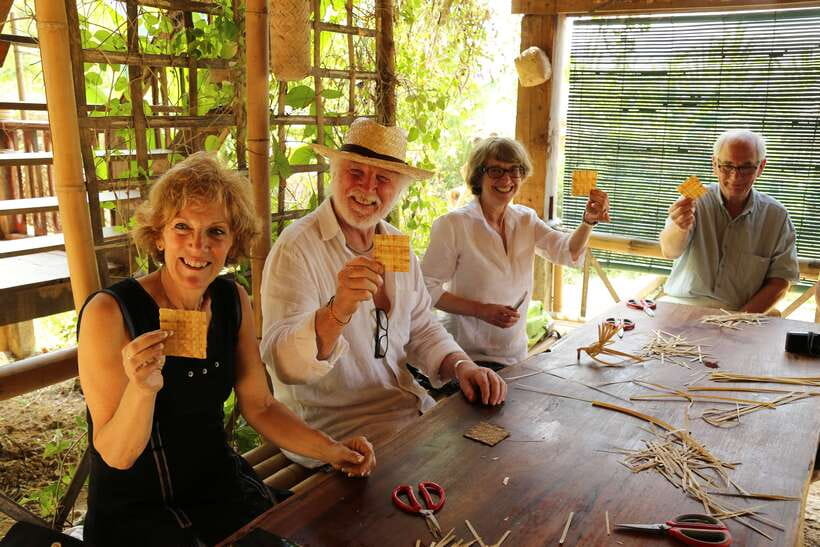
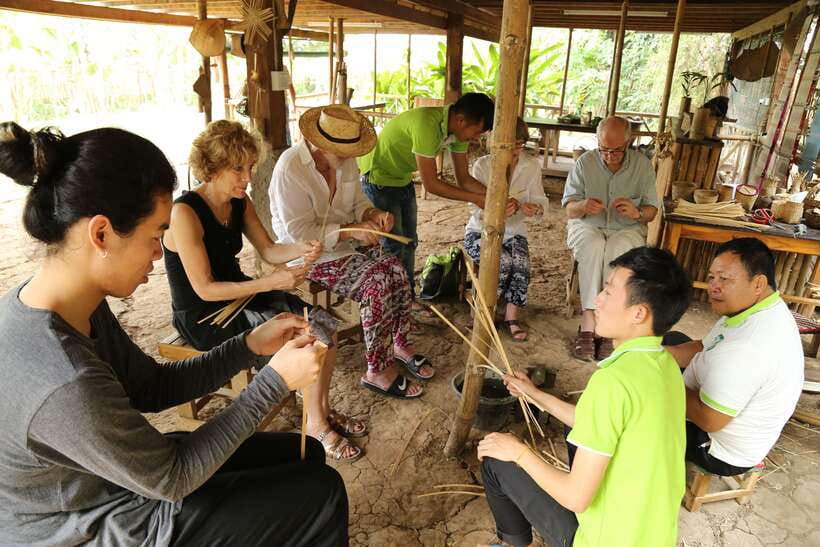
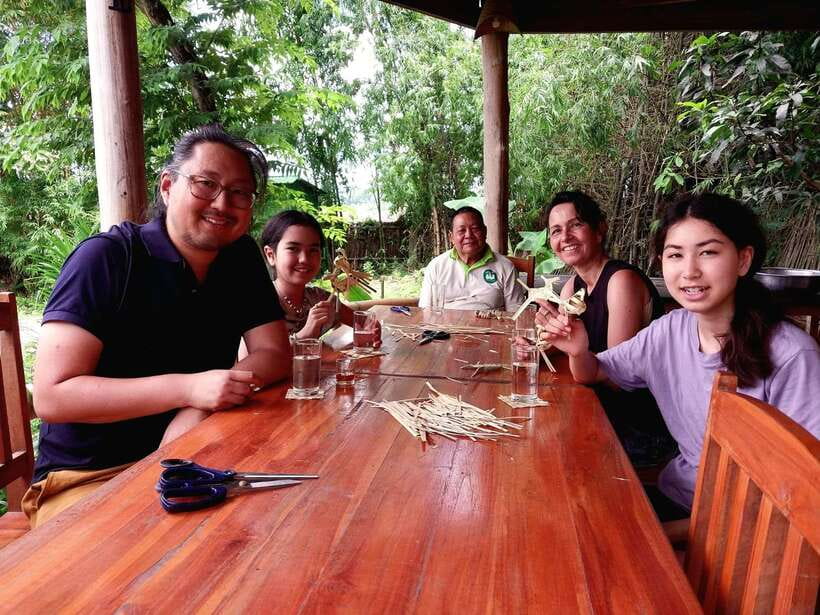
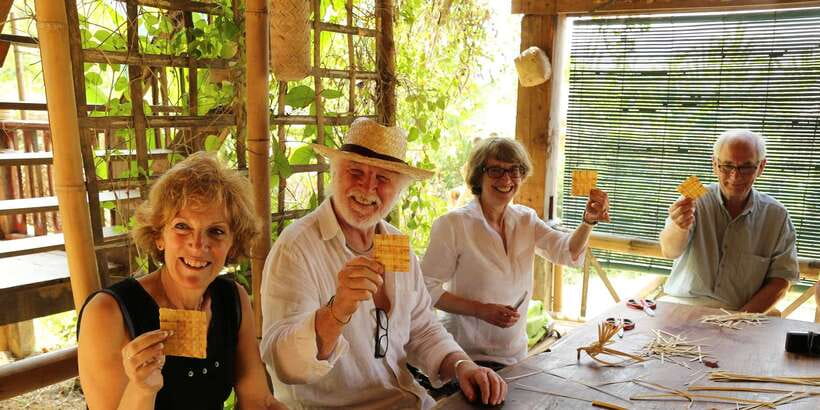
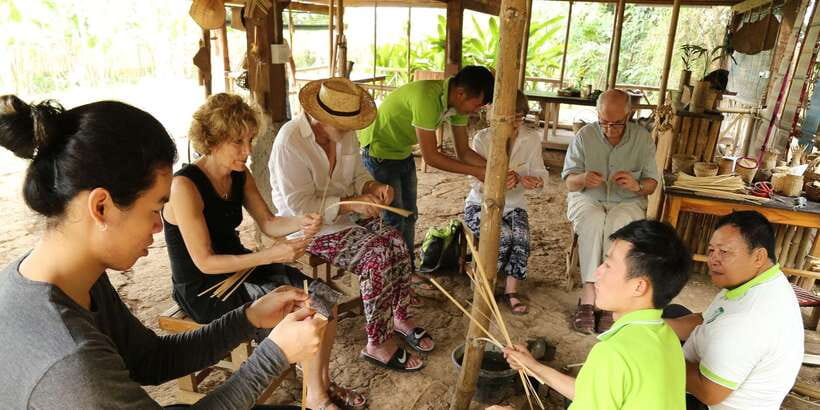
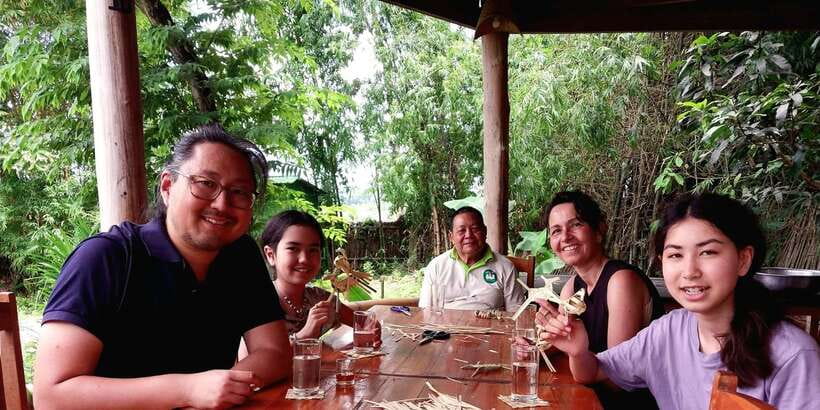
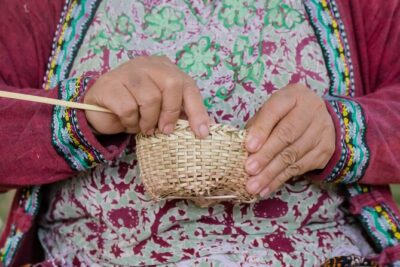
The weaving workshop is the most distinctive part of the outing. Your teacher shows you how bamboo is prepared, including how to sharpen knives and cut the plant into narrow strips. You then use an overlapping technique to form a small mat or coaster-sized souvenir.
This is a genuine hands-on task, not a quick demonstration followed by a souvenir handed to you. The material can be fiddly, and your first strips may not line up neatly. That is where the patient instruction matters. Sia and John are among the instructors praised for explaining the work clearly and helping participants correct mistakes.
You will need to pay attention when using a knife. The class teaches the process under supervision, but it still calls for care. Comfortable clothing is sensible, and loose jewelry or anything you do not want near a work surface is best left at the hotel.
The craft is calming once you get the pattern started. You are working with your hands, repeating a simple rhythm, and making something small enough to take home. The finished mat will not be a master weaver’s work, but that is not the point. It carries the memory of the place more honestly than a shop-bought trinket.
If you are not interested in crafts, this part may feel slow. I would not book the experience only for the cooking if you dislike practical activities. The weaving takes enough attention to be rewarding for some people and mildly frustrating for others.
Cooking Bamboo Shoot Soup and Banana-Leaf Dishes
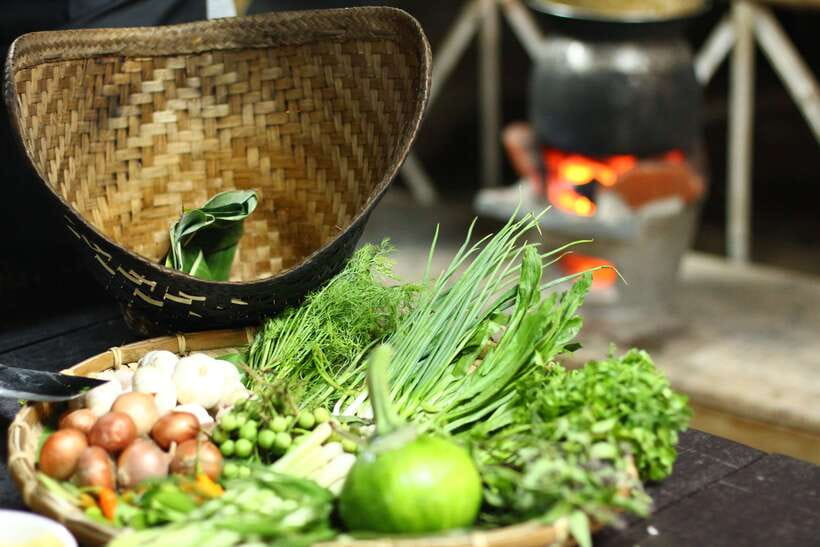
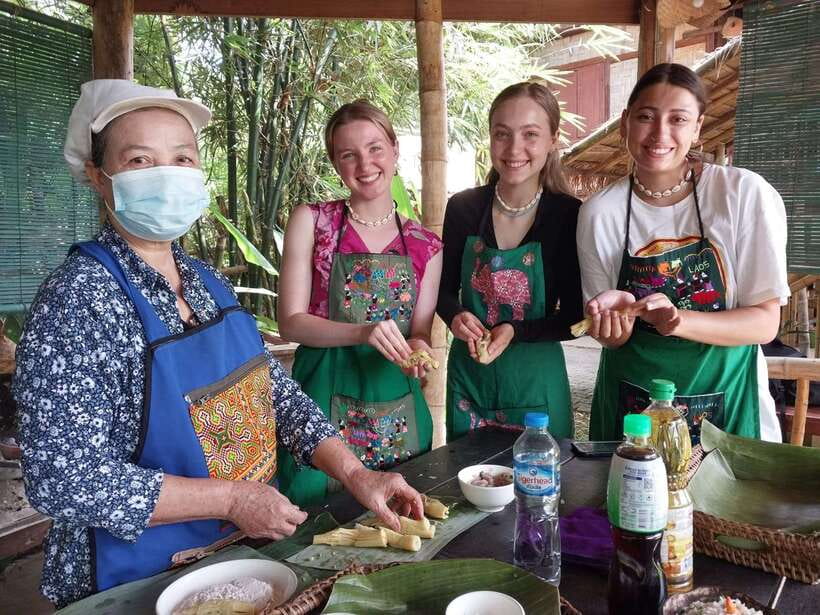
After weaving, the focus shifts to Lao food. You assist the chef in preparing local dishes, with bamboo shoots as a central ingredient. The listed menu includes bamboo shoot soup, bamboo shoot steamed in banana leaf, and bamboo shoot dip.
The cooking lesson is valuable because it shows how bamboo fits into the kitchen, not just the workshop. You see the ingredient handled, seasoned, cooked, and served. The exact supporting dishes can vary, but the meal may also include meat or fish, with vegetarian choices available according to the information provided by participants.
Do not expect a long professional cooking course with a printed recipe booklet. This is a practical demonstration and shared meal. You help with the preparation, learn about ingredients and Lao cooking, then eat what the group has made.
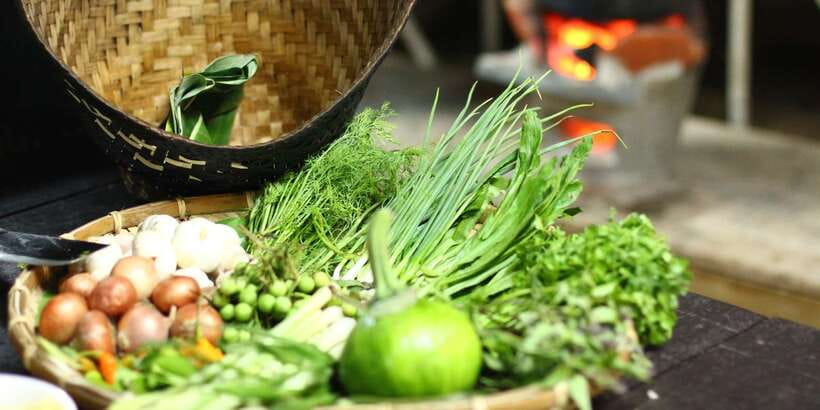
Several details make the meal feel special. Food may be cooked over a real fire, rice can be steamed in bamboo baskets, and dinner or lunch is served in a traditional bamboo tray. The cooking may take place in a garden area, surrounded by bamboo and greenery.
The bamboo shoot dishes are the key reason to pay attention. If you have eaten mostly restaurant food in Laos, this gives you a clearer sense of how local ingredients are used at home. Bamboo shoot dip and steamed bamboo shoot in banana leaf may also be dishes you do not often see on standard restaurant menus.
Tell the instructor about dietary needs before the cooking begins. Vegetarian options have been available, but the supplied information does not promise a full range of dietary substitutions. Alcoholic drinks are not included, and food and drinks from outside are not allowed.
More cooking classes in Luang Prabang:
- Luang Prabang: Evening Cooking Class & Local Baci Ceremony
★ 4.9 · 151 reviews - Luang Prabang: Cooking Class at the Former Royal Palace
★ 4.9 · 51 reviews - Tribal Cooking Class in Luang Prabang Forest and visit
★ 5.0 · 15 reviews - Traditional Market Tour and Private Laotian Cooking Class with a Local
★ 5.0 · 13 reviews
Local Music, Instruments, and the End of the Meal
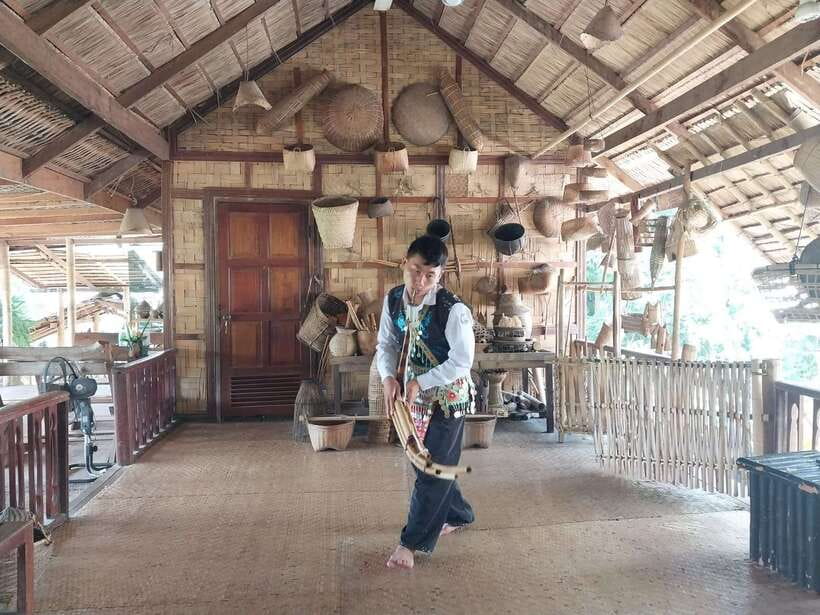
The cultural program continues after the food. Local Lao musicians demonstrate bamboo instruments, and you may get a chance to handle or try them. One account describes a Hmong musician performing and allowing participants to try the instruments.
This is a small but useful addition. Music shows another role for bamboo, and it keeps the activity from becoming only a craft-and-food workshop. Depending on the timing and format, you may also see dancing or take part in a bamboo dance.
The music is not presented as a large stage show. It works better as a close introduction from local people. You can ask questions, watch how the instruments are played, and connect the material in the opening talk with something you can hear.
The evening session has a particular advantage here. You prepare your own dinner and then eat as daylight fades, making the meal feel like the natural end of the visit. The morning session is better for clear photographs of the house, bamboo, and surrounding fields.
Morning Lunch or Evening Dinner?
The two time choices suit different plans.
Choose the morning session if you want:
- Pickup around 8:30 AM
- Better light for photographs
- Lunch in the bamboo house
- A half-day activity that leaves your afternoon free
Choose the evening session if you want:
- A 4:00 PM start
- To prepare and eat your own dinner
- A cooler, more relaxed end to the day
- Music and food as the closing part of the experience
The morning option is practical if you are fitting several Luang Prabang sights into one day. The evening option can replace a standard restaurant dinner with something more personal and active.
The activity lasts four to five hours, so it is not a quick add-on. Allow extra flexibility around pickup and return, especially if you have a fixed evening reservation or transport booking. The return to your hotel is included.
Is $44 a Fair Price?
At $44 per person, this is not the cheapest way to eat in Luang Prabang. You can find a simple local meal for far less. The price makes more sense when you count the tuk-tuk pickup and return, English-speaking instruction, bamboo materials, the weaving lesson, cooking activity, meal, and music.
You are also paying for access to a setting and a family-run cultural activity that would be difficult to arrange on your own. A restaurant can serve bamboo shoot soup, but it will not usually teach you how to split bamboo, weave a mat, or steam rice in a bamboo basket.
Value depends on what you want from your half-day. If you only want lunch, the price may seem high. If you want an activity that combines food, craft, local culture, and transport, it is reasonable.
The high rating of 5 out of 5 from 96 reviews points to a very consistent experience. The praise is especially strong for the hosts, the clear explanations, the beautiful setting, the enjoyable cooking, and the chance to make something by hand.
One comment considered it a little expensive but still counted it among the best activities of a long Southeast Asia trip. That is a useful way to judge it. You are not buying a bargain meal. You are buying a half-day of instruction and contact with local life.
Who Will Enjoy This Experience Most?
I would recommend it to you if you want a break from temples and caves, enjoy making things, or like learning through food. It suits couples, solo visitors, families, and small groups who are comfortable taking part instead of sitting back.
Families should note one encouraging detail: an instructor has helped entertain a young child while adults focused on the class. That does not mean the activity offers formal childcare, so parents still need to supervise their children.
The experience is also a good match for anyone interested in sustainable materials and everyday craft. Bamboo is presented as useful and practical, not as a decorative theme. You leave with a clearer idea of how a plant can support food preparation, fishing, building, household work, and music.
It is less suitable for anyone with limited mobility. The activity takes place in a traditional bamboo house, and the stated restrictions exclude wheelchair users and people with mobility impairments. Pregnant women are also advised not to book.
You should also think about your tolerance for rustic conditions. You may be working with knives, bamboo strips, open-fire cooking, and local ingredients. That is exactly what makes the class feel connected to daily life, but it will not suit someone looking for a polished, hands-off excursion.
Practical Details Before You Book
Wear comfortable shoes and clothes you can move in. The activity is hands-on, and bamboo preparation may leave small fibers or dust on your clothing.
The instructor speaks English. Guides such as Sia and John have been praised for humor, clear explanations, and friendly help during both the craft and cooking sections.
Hotel pickup and drop-off are included from Luang Prabang. Wait in your hotel lobby five minutes before the stated pickup time. A no-show or delay of more than 30 minutes can mean cancellation without a refund.
You can cancel up to 24 hours before the activity for a full refund, and the reserve-now, pay-later option keeps your plans flexible. Check the available start time when booking, since morning and evening schedules are not interchangeable.
Pets are not allowed. Outside food and drinks are also not allowed, and alcoholic drinks are not included.
Should You Book the Bamboo Workshop and Cooking Class?
Book it if you want to understand Luang Prabang through ordinary skills rather than another sightseeing stop. The strongest parts are the bamboo weaving, the bamboo-centered food, the rural house, and the personal help from the instructors.
Choose the morning for photographs and lunch. Choose the evening if you like the idea of cooking dinner and ending with music. At $44, it is best viewed as a cultural workshop with a meal, not a cheap cooking class.
Skip it if you dislike crafts, cannot manage a rustic setting, or need wheelchair access. For everyone else, this is a warm, practical way to spend half a day and take home a small piece of Lao life that you made yourself.
FAQ
How long does the bamboo weaving and cooking experience last?
The activity lasts approximately four to five hours, including the weaving workshop, cooking class, meal, music, and transfers.
What time does the tour start?
The morning session begins with pickup around 8:30 AM. The evening session begins around 4:00 PM. Check availability for the exact starting time when booking.
Is hotel pickup included?
Yes. Pickup and drop-off from hotels in Luang Prabang are included. You should wait in your hotel lobby five minutes before pickup.
What food will I help prepare?
The cooking class includes dishes such as bamboo shoot soup, bamboo shoot steamed in banana leaf, and bamboo shoot dip. The meal is served in a traditional bamboo tray.
Can I attend if I am vegetarian?
Vegetarian options have been available during the cooking class. Tell the instructor about your dietary needs before cooking begins.
Is the experience suitable for wheelchair users?
No. The activity is not suitable for wheelchair users, people with mobility impairments, or pregnant women.
What should I bring?
Bring comfortable shoes and comfortable clothes. Alcoholic drinks are not included, and outside food and drinks are not allowed.
More Workshops in Luang Prabang
- Luang Prabang: Hmong Batik Art Workshop
★ 5.0 · 27 reviews - The Namkhan – Cooking Class
★ 5.0 · 8 reviews - Laos Cooking Class in Luang Prabang
★ 4.5 · 7 reviews - The Namkhan – Yoga Class (8 am or 4 pm)
★ 4.0 · 5 reviews
Just added around Luang Prabang
- The Namkhan – Yoga Class (8 am or 4 pm)★ 4.0 · 5 reviews
- The Namkhan – Traditional Lao Bamboo Weaving★ 5.0 · 4 reviews
- Unwind with a Sunset Cruise on the Mekong River★ 5.0 · 4 reviews
- Sunset Cruise in Luang Prabang with Live Performance★ 4.5 · 3 reviews
- Private Tour: Half-Day City Tour of Luang Prabang★ 4.5 · 4 reviews
- Luang Prabang Street Food Culture, Paper Handicraft Village Tour★ 5.0 · 10 reviews
- Luang Prabang’s Beauty & Heritage in 1 Day – All-Inclusive Tour★ 5.0 · 6 reviews
- Private Luang Prabang City Tour★ 5.0 · 3 reviews
Weaving Workshops, compared.
Day-time Bamboo weaving & Cooking Classes join-in
Read our review →
Evening Bamboo weaving & Cooking classes join-in
Read our review →
Browse the lists this tour appears in