
Reviewed · COOKING CLASSES
Laos Cooking Class in Luang Prabang
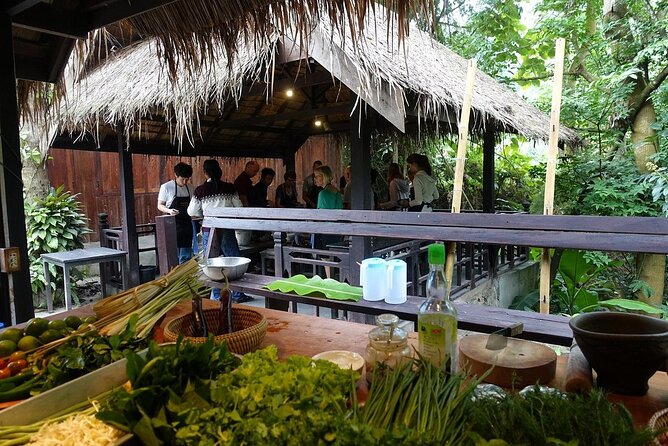
The best part of this Luang Prabang cooking class comes before the stove is lit. You begin at Phosy Market, where local ingredients stop being anonymous items on a menu and become the building blocks of Lao food. Afterward, you cook in a picturesque open kitchen, surrounded by the sort of rural setting that makes a four-hour class feel like a small outing rather than a restaurant lesson.
I like the combination of market shopping and hands-on cooking, since you see the ingredients first and then use them. I also like that Chef Sit breaks the dishes into manageable steps, giving beginners a fair chance while still offering something useful to confident home cooks. The main consideration is the group size, which can reach 12 people, and one scheduled class has been cancelled because too few people booked.
Key points at a glance
- Phosy Market visit: The morning option includes a walk through the local market, ingredient explanations, and a chance to help select what you will cook.
- Chef Sit’s instruction: You learn several Lao dishes with step-by-step help, rather than simply watching a demonstration.
- Five-part meal: The menu can include spicy dipping sauce, dessert, Mok Pa, Laap, lemongrass stuffed with chicken and herbs, and other local dishes.
- Open-kitchen setting: The cooking takes place in a scenic rural location with an authentic kitchen setup.
- Meal and recipe book included: You eat the food you prepare and take written recipes home.
- Small-group format: The class accepts no more than 12 people and lasts about four hours.
Starting at Tamarind at 8:30 am
Your meeting point is Tamarind on Kingkitsarath Road in Luang Prabang. The class begins at 8:30 am, so this is a morning activity rather than a late brunch option. Plan to arrive ready to move on promptly, since the market visit is part of the day’s rhythm.
The morning timing matters. Lao markets are places where fresh produce, herbs, meat, fish, and prepared foods come together early in the day. You are not just being shown a polished collection of ingredients in a cooking school. You get a look at the raw materials that shape ordinary Lao meals.
The provided details do not specify transport arrangements from your hotel, so use the stated meeting point when planning your morning. The activity ends back at the meeting point, which makes it easier to fit into a Luang Prabang sightseeing day.
The group can include up to 12 people. That is small enough for an interactive class, though the experience will feel different with six people than with a full group. If you want personal attention at every cutting board, a larger session may require a little patience.
More cooking classes in Luang Prabang:
- Luang Prabang: Evening Cooking Class & Local Baci Ceremony
★ 4.9 · 151 reviews - Luang Prabang: Bamboo Weaving Workshop & Cooking Class
★ 5.0 · 96 reviews - Luang Prabang: Cooking Class at the Former Royal Palace
★ 4.9 · 51 reviews
Seeing Lao ingredients at Phosy Market
The market stop gives the cooking lesson useful context. You can learn about local Lao ingredients, inspect unfamiliar produce, and select some of the items that will appear in your meal. For anyone who normally encounters Lao food only in a restaurant, this is one of the strongest reasons to choose the class.
The market may look chaotic if you are used to tidy supermarket aisles. That is part of its value. Ingredients are presented in a working food market, not arranged for a cooking show. An instructor helps explain what you are seeing, which is especially useful when you do not recognize the herbs or produce.
The market visit is specifically tied to the morning tour. The supplied schedule gives an 8:30 am start, so you should expect this market portion to be part of your outing. The itinerary does not provide an exact amount of time at the market, and the experience can vary depending on the day’s pace.
This is also where the class begins to answer a practical question: what makes Lao cooking taste like Lao cooking? You will see that the answer is not one magic ingredient. It is the balance of herbs, fresh produce, dipping sauces, meat, fish, and seasoning methods. The class then puts those ideas to work.
Cooking in an open kitchen outside town
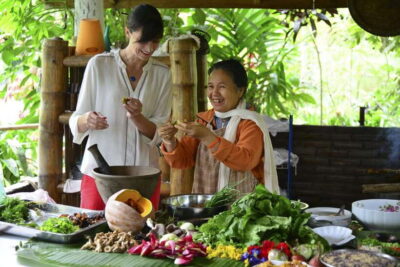
After the market, you return to the cooking location. The setting has been described as a picturesque open kitchen in a rural area, with an authentic setup and suitable equipment. That change of scene is important. You are not stuck in a windowless classroom copying a recipe from a whiteboard.
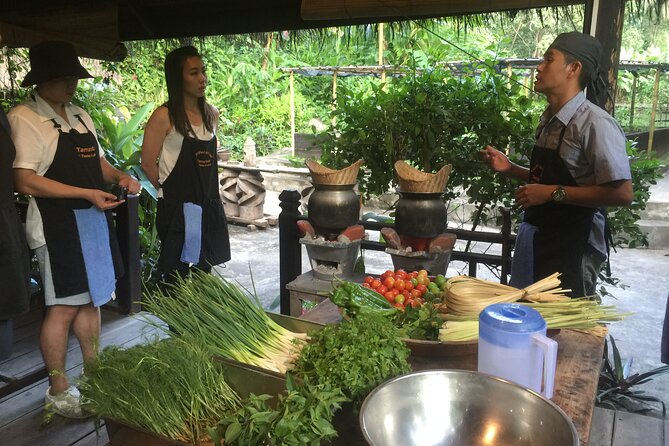
The open-kitchen arrangement also lets the class feel connected to the place. You can watch the instructor prepare the food and then work on your own portion. It is a more social format than a private lesson, but it gives the activity a relaxed, shared-meal quality.
Chef Sit leads the instruction. His teaching style is practical: he first shows how the dishes come together, then helps you prepare them. That structure works well for beginners, since you can watch the full process before handling ingredients yourself.
A capable home cook may find the demonstration familiar in places. Still, the value is in learning Lao combinations and methods that are harder to pick up from a general Asian cooking class. The menu is not limited to one simple dish, so you get a broader taste of the cuisine.
Preparing spicy dips, Mok Pa, Laap, and more
The class covers enough recipes to create a full meal. The named dishes include Lao spicy dipping sauces, Mok Pa, lemongrass stuffed with chicken and herbs, and Laap. Dessert is also included in the class menu described by one participant, along with several other dishes.
Mok Pa is a particularly useful dish to learn because it introduces a traditional Lao preparation rather than a generic stir-fry. The supplied information does not spell out the exact recipe or protein used in your session, so the final preparation may depend on the class menu and available ingredients.
Laap is another important inclusion. This seasoned minced-meat dish is closely associated with Lao cooking, and making it yourself gives you a better sense of how herbs, seasoning, and texture work together. The class is more useful when you pay attention to those balances instead of treating each recipe as a fixed formula.
The lemongrass preparation adds a memorable visual element. Rather than using lemongrass only as a flavoring, you work with it as part of a stuffed dish containing chicken and herbs. That is the kind of detail you are likely to remember when you try the recipe at home.
The menu can amount to one dip, one dessert, and three other dishes. That is a generous amount of food for a four-hour activity, and it explains why the class includes a sit-down meal at the end. You are not rushing through one sample before moving on to another attraction.
More hands-on workshops in Luang Prabang:
- Day-time Bamboo weaving & Cooking Classes join-in
★ 5.0 · 38 reviews - Luang Prabang: Hmong Batik Art Workshop
★ 5.0 · 27 reviews - Evening Bamboo weaving & Cooking classes join-in
★ 5.0 · 17 reviews - Tribal Cooking Class in Luang Prabang Forest and visit
★ 5.0 · 15 reviews
Learning by making your own meal
This is a hands-on class, not a chef demonstration with a token tasting. You receive instructions, prepare the dishes yourself, and get help from the instructor as you work. The format suits beginners because the recipes are taught in stages, but it also gives experienced cooks room to take part rather than simply observe.
One point is worth knowing: in a group, everyone may not have the same cooking ability. A confident cook could find the pace a bit slow when another person is learning basic kitchen skills. On the other hand, that mixed level is part of what makes the class suitable for families and people with little cooking experience.
The instruction may involve the chef preparing the dishes first, then each participant cooking a dish or part of the meal with help. This method gives you a clear model before you begin. It also reduces the risk of missing an important step while trying to follow spoken directions.
The class is designed for all ages and skill levels. That does not mean every moment will be equally challenging. It means you can join without advanced knife skills or prior experience with Lao food, while still coming away with several recipes and techniques to use later.
Eating what you prepared
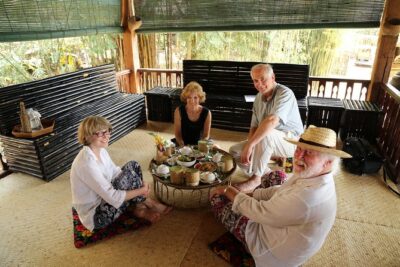
The meal is included, and you sample the dishes you have made. This is more than a convenient lunch. Tasting the finished food helps you understand how the ingredients and methods fit together, especially when you have handled each stage yourself.
The meal also gives you a chance to compare the different dishes. A spicy dip, Laap, Mok Pa, stuffed lemongrass, and dessert do not all play the same role. Eating them together helps you see how Lao meals balance strong flavors and varied textures.
You should expect the meal to reflect the class menu rather than a separate restaurant order. If you have dietary restrictions or strong dislikes, the supplied information does not explain what substitutions are available. It would be sensible to ask the provider before booking if a particular ingredient is essential to avoid.
The amount of food appears generous, but the class is not presented as a fine-dining event. It is a working meal in a cooking-school setting. Come for the chance to make and taste Lao food, not for polished restaurant service.
Taking Lao recipes home
A recipe book is included. This is one of the most practical benefits of the activity, since the market visit and cooking session would otherwise fade into holiday memories once you leave Laos.
The recipe book lets you recreate the spicy dips, Laap, Mok Pa, lemongrass dish, dessert, and other recipes at home. You may not find every local ingredient easily, but the written instructions give you a starting point for adapting the dishes to your own kitchen.
Pay attention during the lesson even with the book in hand. Recipes often cannot capture every visual cue, texture change, or seasoning adjustment. Watching Chef Sit prepare the food, then repeating the process yourself, should make the instructions more useful later.
The cookbook is also helpful for cooks who want to continue exploring Lao food after the trip. You are not simply buying a meal for $58. You are paying for instruction, ingredients, food, a market experience, and something you can use afterward.
Is $58 a fair price?
At $58 per person, this class is not the cheapest way to eat in Luang Prabang. It is also not just a meal. The price covers the cooking instruction, ingredients, market-related experience, prepared food, and the recipe book.
I see the strongest value in the number of dishes. You can work through enough recipes to make a full meal, then eat the results. A class that included only one dish would be harder to justify at this price, particularly in a city where local food can be inexpensive.
The setting adds value too. Cooking in an open kitchen in a rural location gives the day more character than a standard indoor demonstration. The market stop also means you spend time learning about ingredients before cooking them.
The price will make the most sense if you enjoy active experiences and expect to cook from the recipes later. If you only want a quick meal or a short cultural stop, the four-hour commitment may feel like too much. The activity is best understood as a half-day outing with lunch included.
Who will enjoy this class most?
I would recommend this experience to anyone curious about Lao food beyond restaurant menus. It is particularly well suited to first-time cooks, families, and people who like to bring home a practical skill rather than another souvenir.
Experienced home cooks can enjoy it too, especially if Lao cuisine is new to them. You may not need help with basic preparation, but the combination of Laap, Mok Pa, spicy dips, and stuffed lemongrass offers a useful introduction to local cooking.
The class is less suitable if you dislike group activities or want a highly personalized private lesson. With a maximum of 12 people and mixed cooking abilities, you will share the kitchen and the instructor’s attention.
It is also worth checking the date before you commit. The class does not operate from April 13 through April 16 during Laos New Year. Confirmation is provided at booking, and free cancellation is available until 24 hours before the start time. Cancellations or changes inside that 24-hour window are not accepted for a refund.
The drawbacks to keep in mind
The biggest practical concern is that a class may be cancelled if there are not enough participants. A cancellation response in the supplied information says a refund was processed, with the money expected to take two to seven business days to return to the original payment method. That situation is unusual but worth considering if your schedule is tight.
The class is also tied to its fixed 8:30 am meeting time and Tamarind location. You need to arrange your morning around getting there. Since the tour ends at the same meeting point, you will need to plan your next activity from there rather than assume a hotel drop-off.
The exact menu may vary. Several dishes are named, but the information does not promise every item in every session. If you have your heart set on one particular recipe, confirm the day’s menu before booking.
Still, these are manageable concerns. The core experience remains clear: market ingredients, guided preparation, a substantial Lao meal, and recipes to take home.
Should you book the Luang Prabang cooking class?
Book it if you want to understand Lao food by handling the ingredients and making the dishes yourself. The market visit, Chef Sit’s instruction, scenic open kitchen, included meal, and recipe book give this four-hour activity more substance than a quick cooking demonstration.
I would especially choose it early in a Luang Prabang stay. After seeing the ingredients and learning the flavor combinations, you may notice Lao dishes differently at restaurants and markets for the rest of your visit.
Skip it if you want a private class, a short activity, or guaranteed operation regardless of group size. For everyone else, $58 is a reasonable price for a half-day lesson that combines food, local shopping, and a meal you helped create.
FAQ
Where does the Laos cooking class begin?
The class begins at Tamarind, located at V4VR+VMF, Kingkitsarath Road, Luang Prabang, Laos.
What time does the class start?
The stated start time is 8:30 am.
How long does the cooking class last?
The activity lasts approximately four hours.
Is a market visit included?
The morning tour includes a visit to the local market, where you can learn about Lao ingredients and select items for the dishes you will prepare.
What food will I learn to cook?
The class can include Lao spicy dipping sauces, Mok Pa, Laap, lemongrass stuffed with chicken and herbs, dessert, and other dishes. The exact menu is not fully specified.
Is the meal included?
Yes. Cooking ingredients, the cooking class, and a meal are included in the price. Personal expenses are not included.
Just added around Luang Prabang
- The Namkhan – Yoga Class (8 am or 4 pm)★ 4.0 · 5 reviews
- Unwind with a Sunset Cruise on the Mekong River★ 5.0 · 4 reviews
- The Namkhan – Traditional Lao Bamboo Weaving★ 5.0 · 4 reviews
- Sunset Cruise in Luang Prabang with Live Performance★ 4.5 · 3 reviews
- Private Tour: Half-Day City Tour of Luang Prabang★ 4.5 · 4 reviews
- Luang Prabang’s Beauty & Heritage in 1 Day – All-Inclusive Tour★ 5.0 · 6 reviews
- Private Luang Prabang City Tour★ 5.0 · 3 reviews
- Luang Prabang Street Food Culture, Paper Handicraft Village Tour★ 5.0 · 10 reviews
Cooking Classes, compared.
Day-time Bamboo weaving & Cooking Classes join-in
Read our review →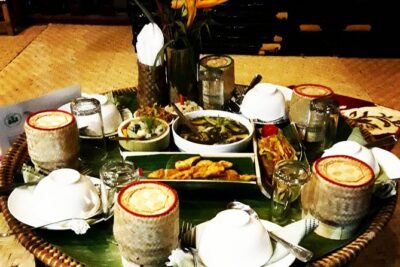
Evening Bamboo weaving & Cooking classes join-in
Read our review →
Tribal Cooking Class in Luang Prabang Forest and visit
Read our review →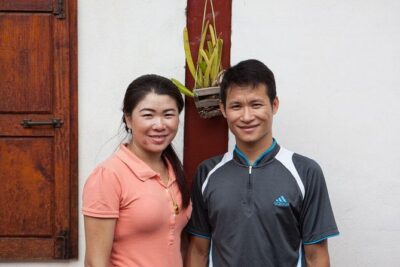
Traditional Market Tour and Private Laotian Cooking Class with a Local
Read our review →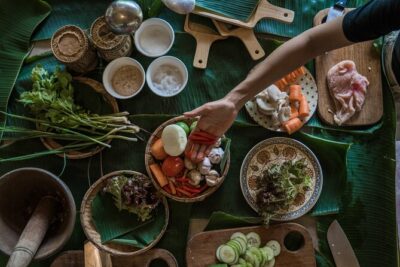
Browse the lists this tour appears in