
Reviewed · COOKING CLASSES
Luang Prabang: Cooking Class at the Former Royal Palace
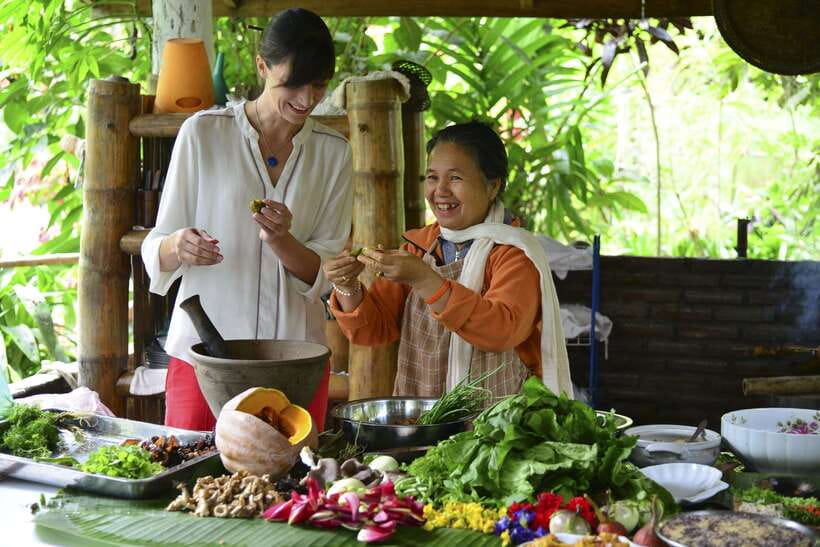
Luang Prabang’s best food lesson begins before you reach the kitchen. You follow a local chef through the morning market, examine unfamiliar herbs and vegetables, and learn what actually goes into Lao cooking. Then you cook and eat your way through a four-hour session at the Victoria Xiengthong Palace setting beside the Mekong.
I like the market visit with a local chef, especially when the guide buys small items for you to taste. I also like the riverside terrace, where your lunch feels connected to Luang Prabang rather than shut away in a classroom. The main drawback is the pause between the market and cooking: the kitchen may need about two hours to prepare ingredients, so this is not four straight hours of chopping and stirring.
Key points to know
- The market comes first: Meet near Wat Xiengthong and explore Luang Prabang’s morning food market by bicycle or tuk tuk.
- Chef-led and small scale: Groups are limited to 10, with English instruction and guides including Noi, Noy, and Vannasone.
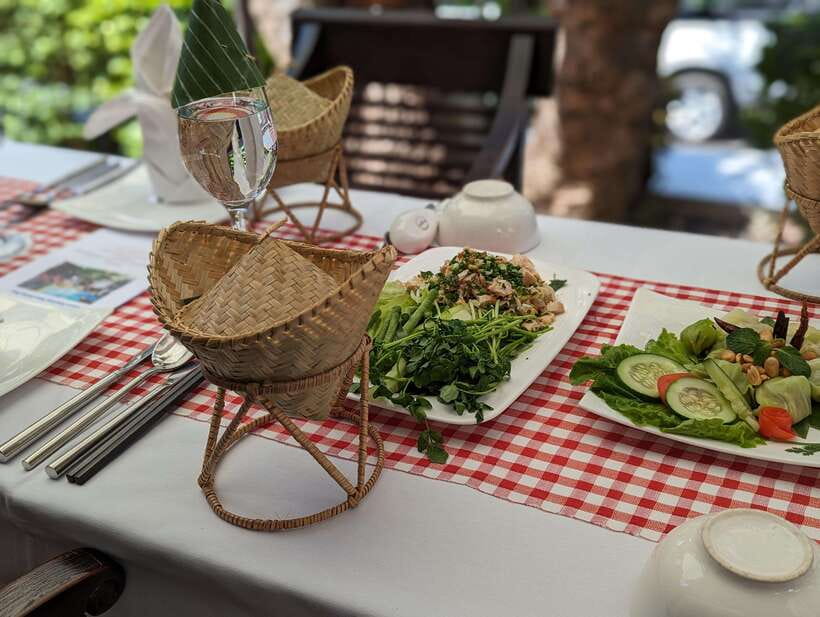
- Four dishes may be served: Past menus have included sticky rice, appetizers, sour soup, chicken laab, and a coconut dessert.
- The setting is part of the appeal: Cooking and lunch take place at Alame Restaurant, with views toward the Mekong.
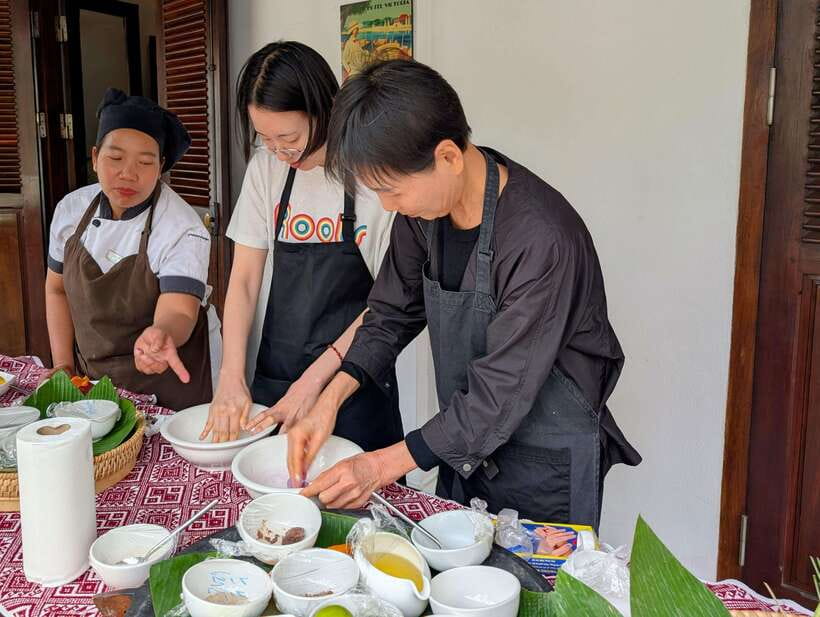
- Expect shared preparation: You help make the dishes, but the group may work together rather than each person cooking every dish from start to finish.
- Vegetarian cooking is possible: Ask for it in advance, and bring a hat for the market and outdoor time.
A Lao cooking class with a market before the stove
Many cooking classes begin with bowls of premeasured ingredients. This one begins with a short lesson in how Luang Prabang buys food. At the morning market, your chef points out produce, herbs, spices, and other local ingredients. That matters because Lao food can look simple on the plate while depending on the right balance of fresh herbs, sour notes, heat, and texture.
The market is not just a shopping stop. It gives you a better sense of what local cooks work with each day. You may see ingredients you would pass by on your own, and your guide can explain how they are used. Several of the chefs, including Noi, have also offered small tastings along the way, which turns the walk into a practical introduction to Lao flavors.
The visit lasts about an hour. Transportation is by bicycle or tuk tuk, depending on the arrangement. The meeting point is on Kounxoau Road in Ban Phonehueng, close to Wat Xiengthong. That location is useful if you are staying in the old town or planning to visit the temple before or after the class.
Bring a hat. The morning market and the route between stops can involve standing and walking outdoors, and the activity is not suited to wheelchair users. You should also be comfortable on your feet for extended periods.
More cooking classes in Luang Prabang:
- Luang Prabang: Evening Cooking Class & Local Baci Ceremony
★ 4.9 · 151 reviews - Luang Prabang: Bamboo Weaving Workshop & Cooking Class
★ 5.0 · 96 reviews - Day-time Bamboo weaving & Cooking Classes join-in
★ 5.0 · 38 reviews
What the market visit teaches you
A good market tour helps you understand the dishes before you cook them. Instead of treating herbs and vegetables as decoration, you start to see how they form the backbone of Lao food. The chef can show you which ingredients are used for soups, salads, curries, sticky rice, and desserts.
The market also gives you a little local context without turning the morning into a history lecture. You are there to see food being bought, handled, and selected. Guides such as Noi have been praised for explaining what ingredients are and how they are used, while keeping the pace relaxed.
That relaxed pace is worth noting. The market is described as lively and educational, but not rushed. One group even stopped for fruit and juice, and another had time for a coffee near the Mekong afterward. If you prefer an activity that moves from one scheduled task to the next, you may find the morning loose. If you like room to look around, it works well.
The break before cooking: useful, but not fully hands-on
After the market, the cooking does not always begin right away. The kitchen may need time to prepare ingredients, and you can have roughly two hours to visit nearby temples, shops, or cafés. Some people will appreciate the pause, especially after an early market visit. It gives you time to explore the neighborhood instead of spending the whole morning in one room.
I would plan this part rather than leave it vague. The location near Wat Xiengthong gives you several nearby options, and the Mekong is close enough for a quiet coffee stop. But this is also the clearest weakness of the experience. If you book a cooking class because you want continuous practical work, two hours of waiting may feel long.
There is a second point to understand. The kitchen may do some preliminary preparation before you return. That allows the class to cover several dishes within the available time, but it means you may not handle every ingredient from the first cut to the final plate.
That tradeoff is common in group cooking classes. You get a broader meal and a manageable four-hour schedule, but less individual control. One person may prepare part of the soup while another handles the salad. If your group works well together, this feels social and easy. If you want to master each dish independently, ask how tasks will be divided when the class begins.
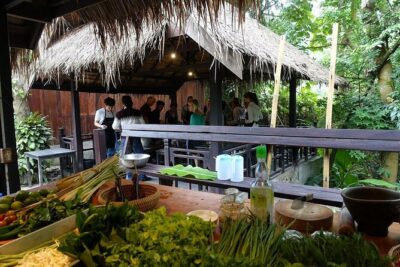
Cooking on the terrace at Alame Restaurant
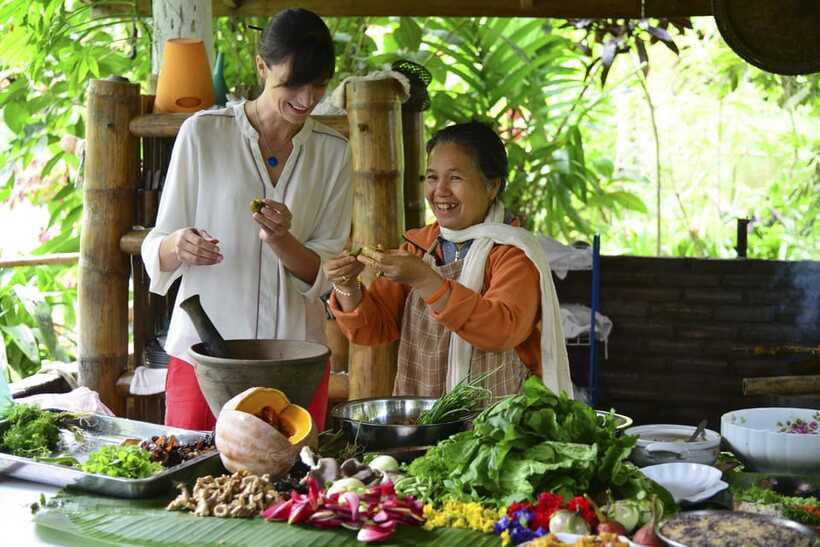
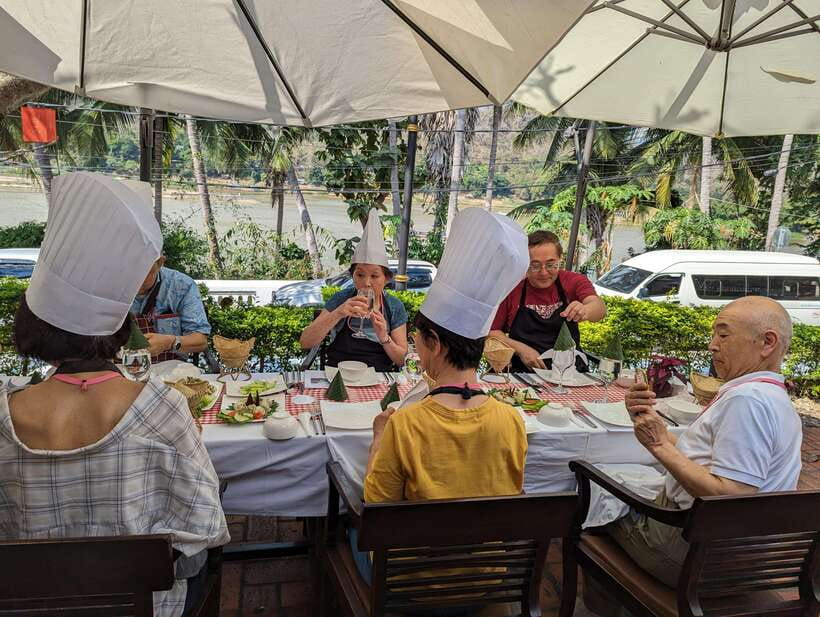
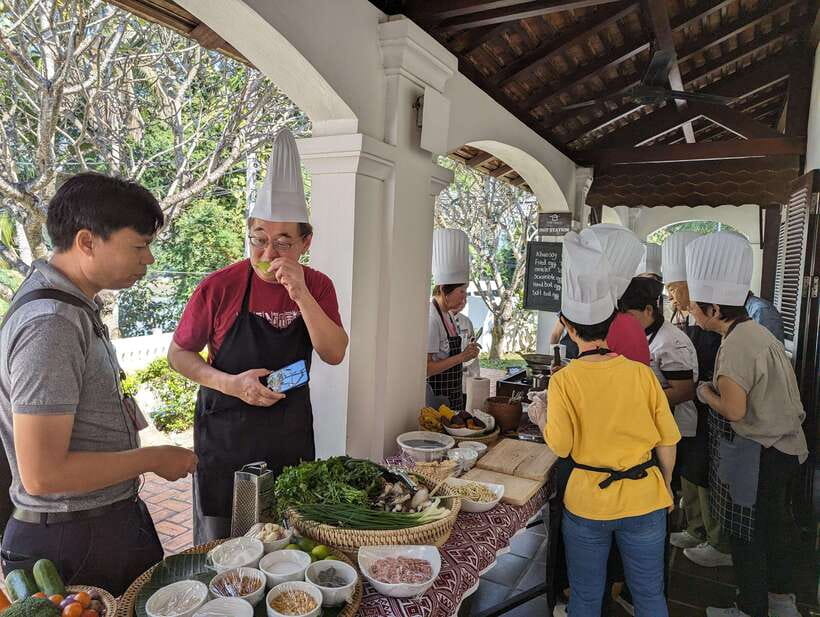
The cooking session lasts about two hours and takes place at Alame Restaurant, connected with the Victoria Xiengthong Palace setting. The restaurant sits beside the Mekong, and the terrace views add something a standard cooking school cannot provide. You are not simply following instructions indoors. You are preparing lunch in a quiet heritage setting with river activity beyond the table.
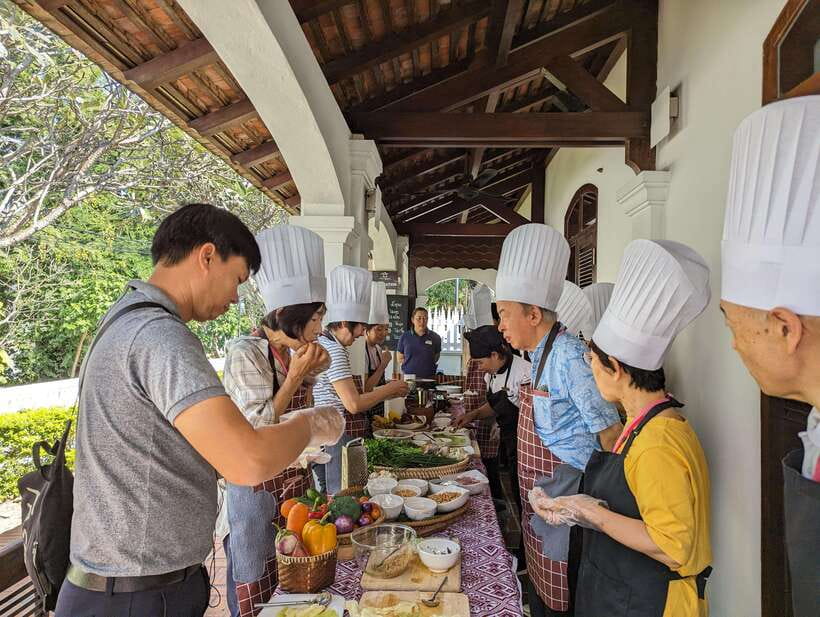
The teachers keep the class practical. You can expect demonstrations, clear instructions, and guided work with cutting, mixing, and cooking. Past classes have included three or four dishes, with examples such as:
- Sticky rice
- Fresh appetizers
- Sour soup with pork, mushrooms, and herbs
- Chicken laab
- Coconut rice balls or another coconut dessert
The exact menu may vary, so do not book expecting one fixed set of recipes. The central idea stays the same: traditional Lao food prepared with fresh local ingredients and taught by an English-speaking local chef.
The strongest part of the class is the balance between explanation and participation. You are not left to guess what to do, but you also are not merely watching a chef work. Guides such as Noi and Vannasone have been praised for being patient, funny, and clear. That makes a difference for beginners, especially when the ingredients are unfamiliar.
You should also expect a group meal rather than four separate private cooking stations. Everyone contributes to the dishes. This makes the class more relaxed and gives you a chance to talk with other participants, but it can limit how much of each recipe you personally prepare.
More hands-on workshops in Luang Prabang:
- Luang Prabang: Hmong Batik Art Workshop
★ 5.0 · 27 reviews - Evening Bamboo weaving & Cooking classes join-in
★ 5.0 · 17 reviews - Tribal Cooking Class in Luang Prabang Forest and visit
★ 5.0 · 15 reviews - Traditional Market Tour and Private Laotian Cooking Class with a Local
★ 5.0 · 13 reviews
The dishes: what you may actually learn
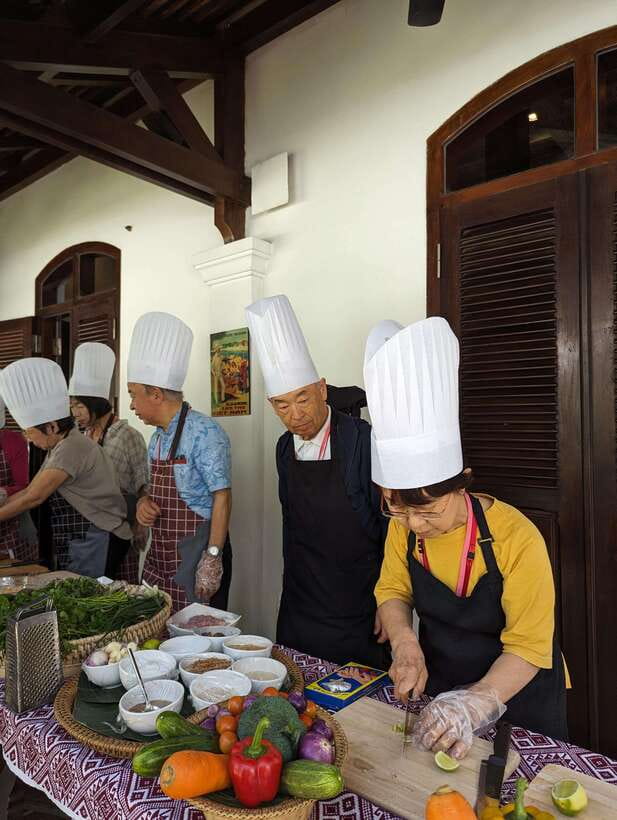
Laos is often overshadowed by the better-known cuisines of neighboring Thailand and Vietnam. This class gives you a chance to notice the differences. Laab, for example, is a herb-filled meat salad with a fresh, sharp character. Sour soup brings another balance of herbs, broth, and tang. Sticky rice is not just a side dish. It is a basic part of the meal and worth learning properly if you want to recreate a Lao table at home.
The menus described by past participants include enough variety to make the lunch feel like a full meal. You may prepare a soup, salad, appetizer, rice dish, and dessert, though the final combination can change. Fresh herbs appear often, and the lesson focuses on how Lao cooking gets flavor from local ingredients rather than heavy sauces.
Vegetarian food is available, but you need to request it ahead of time. That is important because the group menu may otherwise include pork or chicken. The supplied information does not specify every possible dietary adjustment, so tell the operator your needs before the day of the class rather than waiting until you arrive.
The recipes are a valuable part of the experience. You receive them to take home, which gives the class a practical afterlife. A market visit is easy to remember, but written recipes help you turn the memory into dinner once you are back home.
Lunch beside the Mekong
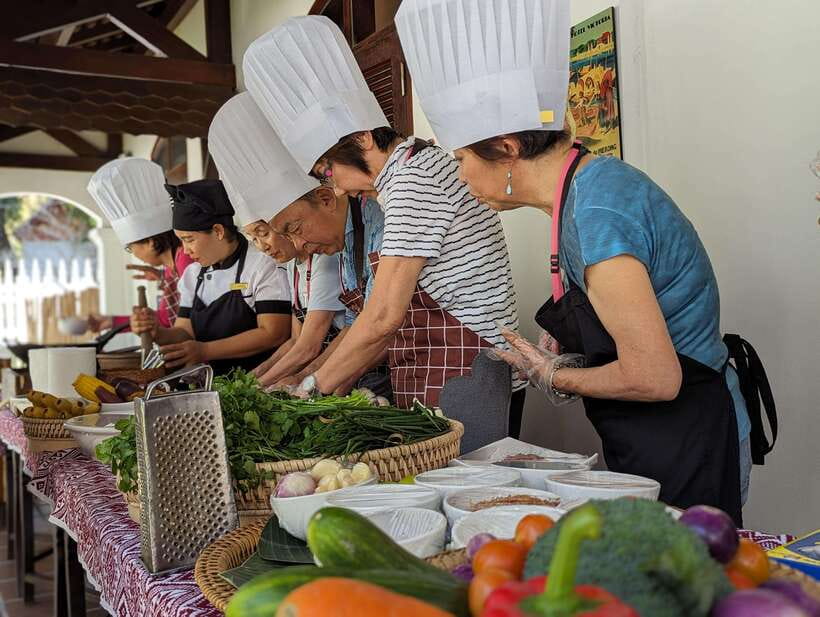
After the cooking, you sit down to eat the food you helped prepare. Lunch lasts about an hour and is served in the riverside restaurant setting. The view is not a minor extra. It changes the pace of the meal, giving you time to look toward the river and enjoy what the group has made.
This is also where the shared cooking format pays off. You may not have cooked every dish from start to finish, but you can taste the full spread. Past menus have included several courses and a coconut-based dessert, so lunch can be substantial.
Drinks are not included, and tips are not included either. Keep that in mind when judging the $45 price. The cost covers the market visit, transportation by bicycle or tuk tuk, instruction, and lunch. For a four-hour activity with a small group and a local chef, I consider that a fair price, particularly if you value the setting and the meal.
It is less attractive value if your only goal is intensive cooking practice. A local market tour, a long break, shared preparation, and lunch make this a cultural food outing as much as a technical lesson.
The guides make the difference
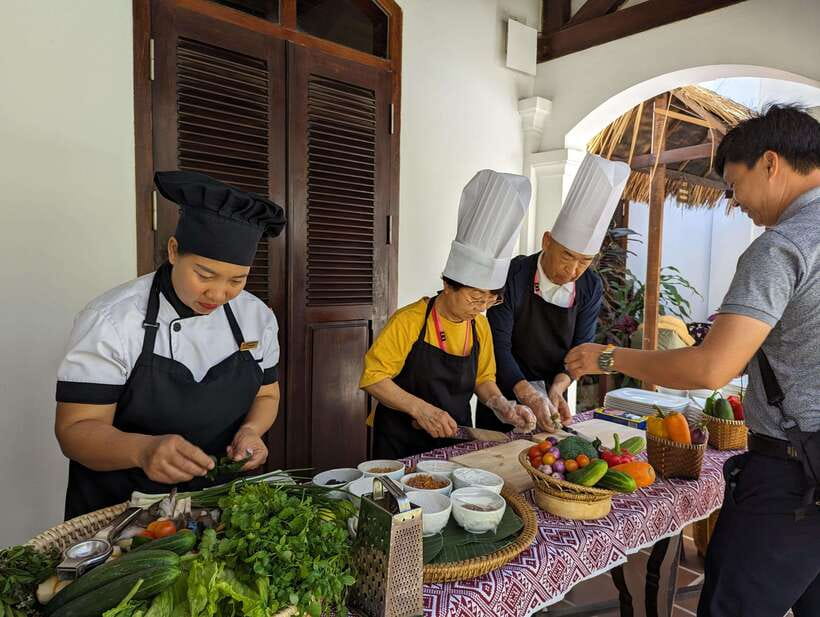
The experience appears to depend heavily on the individual chef. Noi is repeatedly described as kind, funny, patient, and well organized. Noy has also led classes, and Vannasone has guided market walks and cooking sessions. Names can vary by date, so you may not receive a particular chef.
That is worth knowing because the best part of the class is not only the recipe list. It is the way the chef explains unfamiliar foods, answers questions, and lets the group work at a comfortable pace. The English instruction is intended for an international audience, but the quality of the day will still depend on communication within your particular group.
The limit of 10 participants helps. It is small enough for the chef to give direction without making the class feel like a demonstration for a crowd. A group of seven has been described as comfortable, and solo participants may occasionally find themselves in a much smaller class. Group size can affect how much hands-on time you get, so it is worth checking availability.
Who should book this experience
I would recommend this class to first-time visitors who want a gentle introduction to Lao food and daily market life. It suits couples, solo visitors, and small groups who enjoy eating as much as cooking. It is also a good choice if you want one activity that combines transport, local food, a short cultural visit, a meal, and recipes.
Families with very young children should note that babies under one year are not accepted, and baby carriages are not allowed. The class is also not suitable for wheelchair users or people over 95. Anyone with limited standing tolerance should think carefully before booking, since the market and cooking session require time on your feet.
Experienced cooks may find the class enjoyable, but perhaps not demanding enough. You may learn more about ingredients and Lao flavor combinations than advanced knife skills or recipe technique. The group format also means you may not complete every stage of every dish yourself.
The class works best if you accept it as a food and culture morning, not as a professional kitchen workshop. You will get more from it if you enjoy the market, ask questions, taste unfamiliar items, and treat the waiting period as part of the day.
Practical details before you go
The activity begins and ends at Victoria Xiengthong Palace near Wat Xiengthong, on Kounxoau Road in Ban Phonehueng. The stated duration is about four hours, although the cooking description also refers to roughly three hours, so confirm the exact start and end time when booking.
English is the listed language. The group is limited to 10 people. You can cancel up to 24 hours ahead for a full refund, and reserve now while paying later, which helps if your Luang Prabang schedule is still changing.
Wear comfortable clothes for standing and cooking. Bring a hat. Do not bring alcohol or drugs, and drinks are not allowed in the vehicle. Sharp objects and weapons are prohibited, though the kitchen will provide the cooking equipment needed for the class.
Should you book the Luang Prabang cooking class?
Book it if you want to understand Lao food through a local market, a friendly chef, and a pleasant riverside meal. The strongest reasons are the market guidance, the calm terrace setting, the small group size, and the recipes you can use later.
Think twice if you want nonstop cooking or a fully individual lesson. The preparation break can take about two hours, and the group usually shares the work. For most visitors, the $45 price is sensible because it covers more than instruction: you get a market outing, transport, a full lunch, and a memorable setting near the Mekong.
FAQ
Where does the cooking class meet?
The meeting point is on Kounxoau Road in Ban Phonehueng, near Wat Xiengthong Temple, at Victoria Xiengthong Palace.
How long does the experience last?
The activity is listed as lasting about four hours. The schedule includes roughly one hour for the market visit, two hours for cooking, and one hour for lunch.
Is transportation included?
Yes. The morning market visit includes transportation by bicycle or tuk tuk.
What food will I cook?
Menus can vary, but dishes mentioned include sticky rice, appetizers, sour soup, chicken laab, and coconut desserts. You may prepare three or four dishes.
Are vegetarian options available?
Yes. Vegetarian options are available, but you need to notify the operator in advance.
Is the class suitable for beginners?
Yes. The activity is hands-on and led in English, with chefs explaining the preparation steps and guiding the group through the recipes.
What is included in the $45 price?
The price includes the morning market tour, the cooking class, and lunch. Drinks and tips are not included.
Just added around Luang Prabang
- The Namkhan – Yoga Class (8 am or 4 pm)★ 4.0 · 5 reviews
- The Namkhan – Traditional Lao Bamboo Weaving★ 5.0 · 4 reviews
- Unwind with a Sunset Cruise on the Mekong River★ 5.0 · 4 reviews
- Sunset Cruise in Luang Prabang with Live Performance★ 4.5 · 3 reviews
- Private Tour: Half-Day City Tour of Luang Prabang★ 4.5 · 4 reviews
- Luang Prabang Street Food Culture, Paper Handicraft Village Tour★ 5.0 · 10 reviews
- Luang Prabang’s Beauty & Heritage in 1 Day – All-Inclusive Tour★ 5.0 · 6 reviews
- Private Luang Prabang City Tour★ 5.0 · 3 reviews
Cooking Classes, compared.
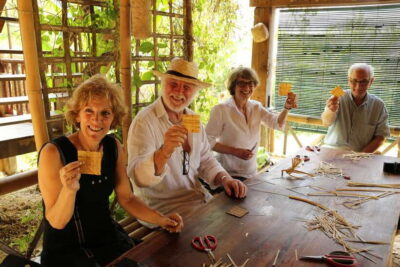
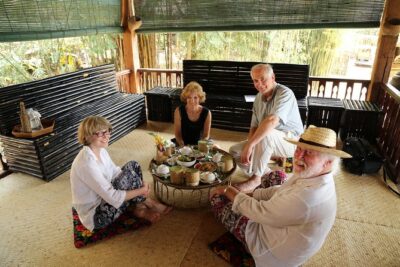
Day-time Bamboo weaving & Cooking Classes join-in
Read our review →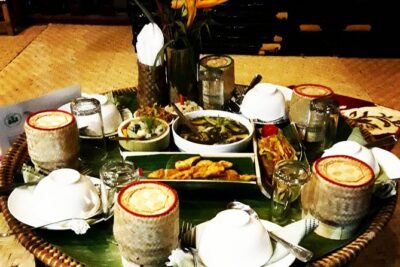
Evening Bamboo weaving & Cooking classes join-in
Read our review →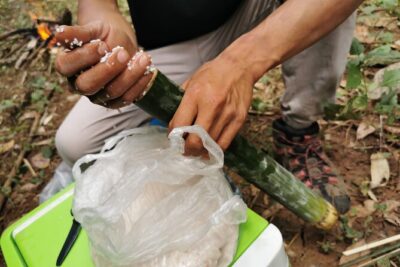
Tribal Cooking Class in Luang Prabang Forest and visit
Read our review →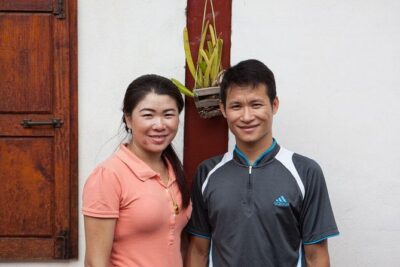
Traditional Market Tour and Private Laotian Cooking Class with a Local
Read our review →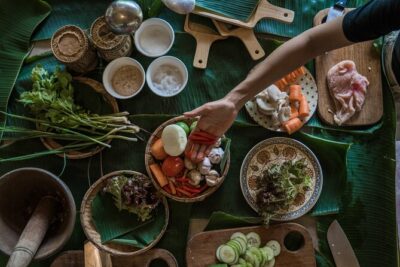
Browse the lists this tour appears in