
Reviewed · LUNCH EXPERIENCES
Luang Prabang Private Full-Day Tour and Lunch
Luang Prabang is compact, but its finest sights reward a guide who can connect Buddhist life, royal history, architecture, and Laos’ many ethnic cultures. This private day brings those pieces together, ending with sunset from Mount Phousi and a stroll through the Night Market.
I like the mix of famous temples and less polished stops, especially the weaving villages of Ban Xiengkhong and Ban Xienglek. I also like having private transport, lunch, entrance fees, and hotel pickup covered in one package. The drawback is a full eight-hour schedule with plenty of walking and stairs, so it is not a good match for visitors with mobility limits.
Key points to know
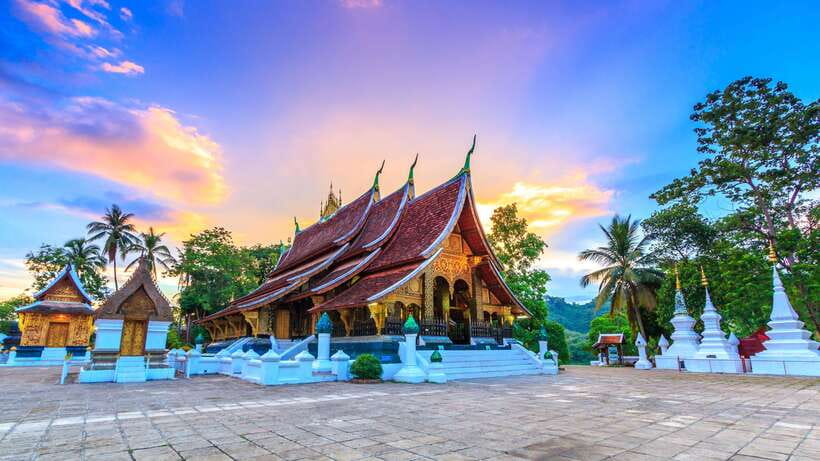
- Wat Xiengthong gives you the architectural highlight: Its low-sweeping roofs are a classic example of Laotian temple design.
- The route covers Luang Prabang’s main cultural sights: You visit the Royal Palace Museum, Wat Sene, Wat Visoun, Wat Aham, and Wat Mai.
- The Arts and Ethnology Centre adds useful context: It introduces Laos’ many ethnic cultures before you visit nearby weaving villages.
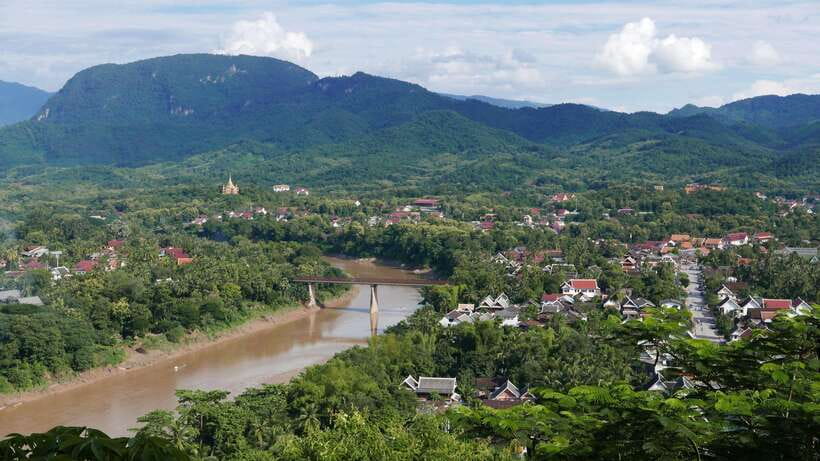
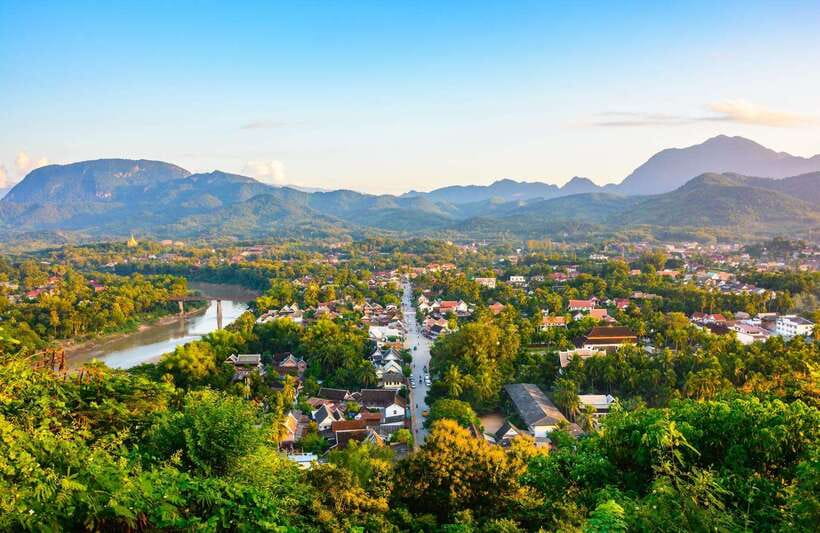
- Mount Phousi supplies the day’s big view: The climb ends with a gilded stupa, the city, and the Mekong River at sunset.
- Private transport keeps the day practical: A driver and English-speaking guide collect you at your hotel or guesthouse and return you there.
- The $110 price buys convenience as much as sightseeing: Lunch, admission fees, transport, and a private guide are included, but personal expenses are not.
Why this private day works well in Luang Prabang
This is a culture-first tour rather than an adventure outing. You spend the day around temples, museums, traditional crafts, and viewpoints, with short van rides linking the stops. That makes it a useful first full day in Luang Prabang, especially if you want someone else to handle the route.
The private format matters here. Luang Prabang’s religious buildings are not just photo stops. A guide can explain what you are seeing, point out details in the temple decoration, and help you understand how royal and Buddhist traditions shaped the town.
You should expect an English-speaking guide and driver, hotel or guesthouse pickup, and about eight hours on the road and on foot. One guide named in a booking review was Phai, praised for clear English, an easy manner, and strong knowledge of the sights. You cannot count on receiving Phai, but the experience is designed around a live English-speaking guide rather than a recorded commentary.
The day begins after breakfast at your hotel. Exact starting times depend on availability, so check the schedule before booking. Wear shoes you can walk in, carry water, and bring a hat, sunscreen, and camera. Temples require respectful clothing, and flash photography is not allowed.
More Private Tours in Luang Prabang
- Luang Prabang Private Minivan
★ 4.5 · 36 reviews - Private Luang Prabang City Tour
★ 5.0 · 27 reviews - Luang Prabang Private Airport transfers
★ 4.0 · 22 reviews
Wat Xiengthong and the classic Luang Prabang view
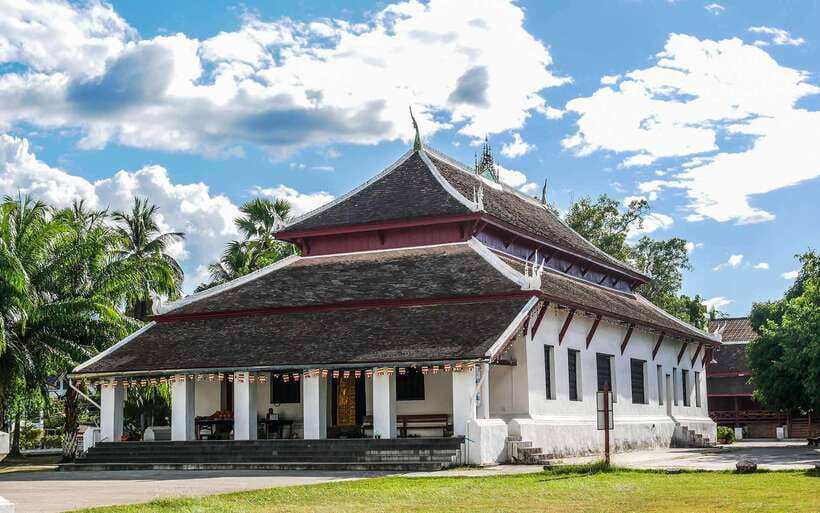
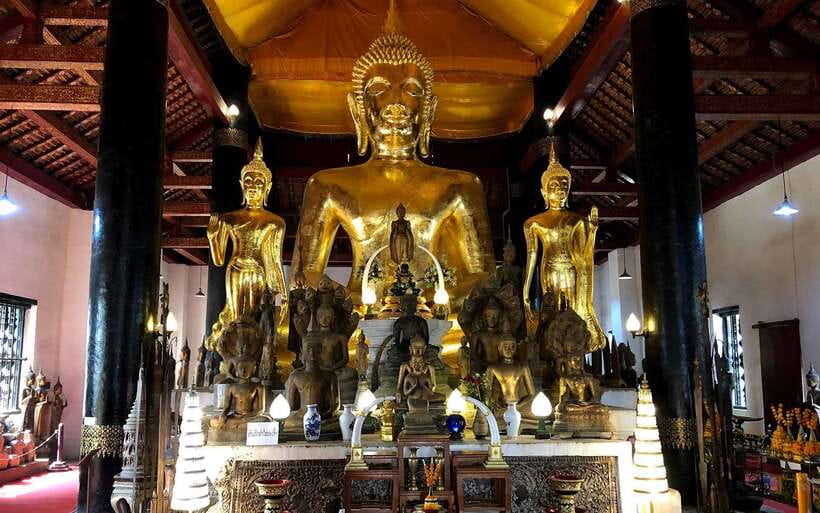
Wat Xiengthong receives about an hour, making it one of the most important stops of the day. Its roofs sweep low toward the ground, a form strongly associated with classical Laotian architecture. Take time to look at the roof lines and the temple details rather than rushing in for one photograph.
This is also a good place to ask your guide about the role of temples in Luang Prabang. The tour calls this the magnificent temple of the route, and it is easy to see why. The building has a refined, balanced appearance that differs from the grander religious monuments you may know from Thailand or Cambodia.
The first transfer takes about 15 minutes. Short rides are a real benefit on a warm day, since you are not spending all your energy walking between distant sights. Still, the schedule includes several visits, so the pace is active rather than leisurely.
Royal Palace Museum: a look at Laos’ royal past
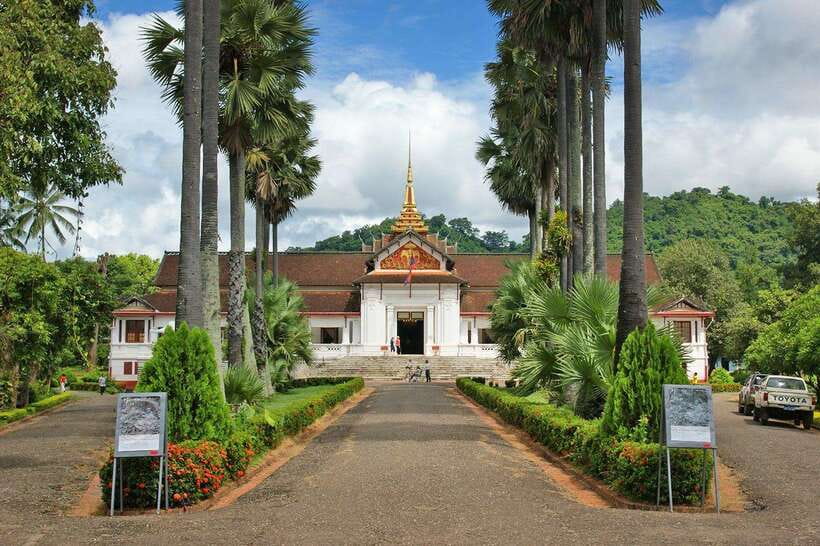
The former Royal Palace Museum, also called the National Museum of Luang Prabang, receives about an hour. You can expect artifacts connected with the Lao royal household and the country’s cultural traditions.
This stop works best when you pay attention to the objects and ask questions. The museum gives the temples a wider setting: Buddhism, royal power, local customs, and the country’s many ethnic groups are all part of the story. The tour description highlights the range of artifacts, so this is more than a quick exterior visit.
The museum is also a useful contrast to Wat Xiengthong. At the temple, you see an active religious tradition expressed through architecture. At the palace, you get a more formal look at the political and cultural world that once centered in Luang Prabang.
Photography rules can vary inside cultural sites, and flash photography is specifically not allowed on this tour. Follow the guide’s instructions and keep your camera ready for approved areas.
Wat Sene, Wat Visoun, and Wat Aham
Wat Sene is presented as Luang Prabang’s oldest temple. Its place in the route gives you a chance to see a religious site with a long connection to the town rather than only visiting its most famous postcard view.
The name Wat Sene means a temple associated with a hundred thousand treasures, according to the traditional interpretation of its name. You do not need to linger on labels or technical details to enjoy it, but a guide can help make the stop more meaningful by explaining the temple’s place in local Buddhist life.
Wat Visoun brings a different visual feature: its impressive stupa. This stop is worth separating from the other temples in your mind because the stupa gives the visit a strong central form. Wat Aham follows with its shrine, adding another layer to the town’s religious character.
The supplied schedule allows around 30 minutes for one of these short visits and about an hour for another, though the exact order can vary. That is enough time for a guided look, photographs, and a few questions, but not enough for a slow, unhurried study of every detail.
Wat Mai is another city stop later in the day. Its inclusion helps round out the temple circuit, though the most distinctive architectural moments are likely to be Wat Xiengthong’s low roofs, Wat Visoun’s stupa, and Wat Aham’s shrine.
A few more Luang Prabang half-days to weigh up
- From Luang Prabang: Guided Mountain Bike Tour with Lunch
★ 4.7 · 72 reviews - Luang Prabang: Countryside Mountain Bike Tour with Lunch
★ 3.6 · 7 reviews - Vientiane City Highlights Tour with Buddha Park & Lunch
★ 4.7 · 38 reviews - Vang Vieng: Blue Lagoon and Countryside Bike Tour with Lunch
★ 4.0 · 36 reviews
The Arts and Ethnology Centre puts the temples in context
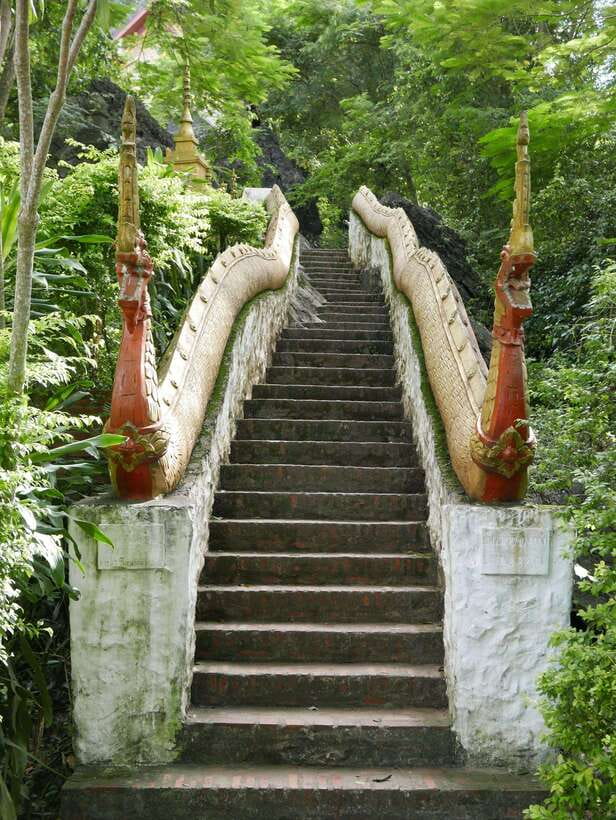
After lunch, the tour visits the Arts and Ethnology Centre. This is one of the most useful stops for anyone who wants to understand Laos beyond Luang Prabang’s old town.
The centre focuses on Laos’ many ethnic cultures. That matters because the country is not culturally uniform. Clothing, weaving, household objects, customs, and community traditions vary from one group to another. Museum displays can give you a framework for what you later see in the weaving villages.
I like the order here. You first learn about the country’s cultural variety, then head out to Ban Xiengkhong and Ban Xienglek. The visit to the villages becomes more than a shopping stop because you have already been introduced to the meaning of textiles and traditional craft.
The centre is not a substitute for a long rural excursion. The tour gives it a focused visit, then moves on. If your main interest is textiles, ask your guide to point out the differences between the displays and the woven goods you see later.
Ban Xiengkhong and Ban Xienglek, a closer look at weaving
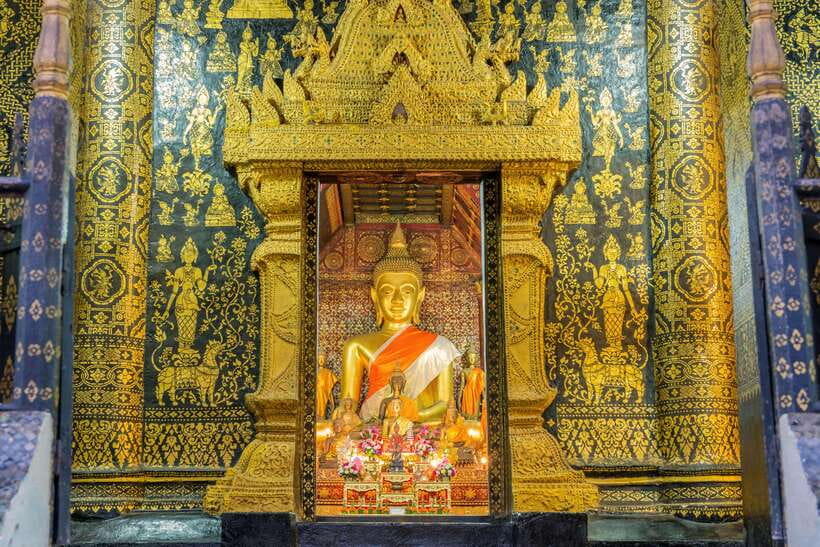
The two weaving villages provide one of the day’s more grounded experiences. You leave the central sights and see communities associated with traditional textiles and local craft.
Do not expect this to be a separate craft workshop unless the guide specifically explains otherwise. The stated program is a visit to the villages, so the value comes from seeing where weaving traditions are connected to daily life and from having time to look at locally made goods.
The villages also give you a break from temple interiors and museum displays. You can compare what you learned at the Arts and Ethnology Centre with the textiles and patterns presented here. If you plan to buy something, inspect the work carefully and ask about materials and production.
One practical point is that the route includes a local lunch, but the exact restaurant and menu are not specified. A Portuguese booking note mentions waterfalls and seeing one elephant at the place where lunch took place, but neither waterfalls nor elephants appears in the stated route. Book this day for temples, culture, weaving, and the city view, not for a wildlife or waterfall excursion.
Mount Phousi at sunset
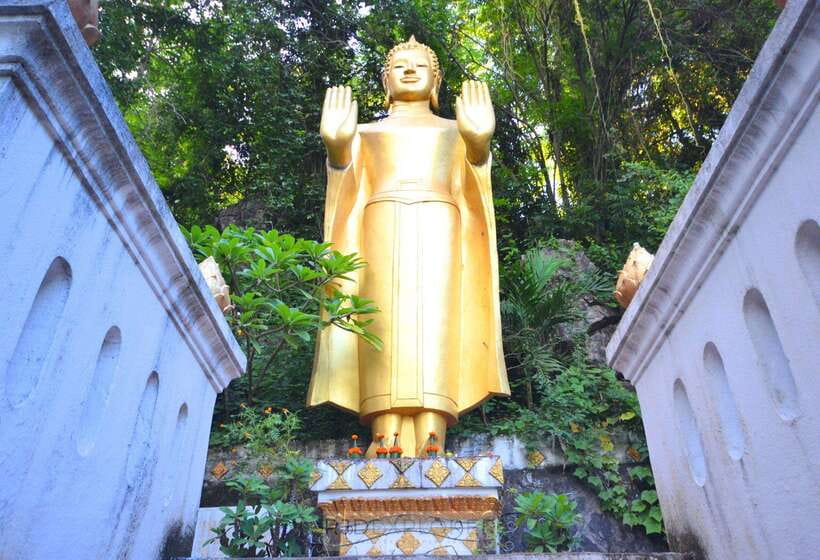
The climb to the top of Mount Phousi is the day’s most physical section. The reward is a sacred gilded stupa and a wide view over Luang Prabang and the Mekong River.
Sunset timing gives this stop its appeal. Light changes quickly, so keep your camera handy and allow yourself time to look beyond the lens. From above, the compact shape of Luang Prabang becomes easier to understand, with the river and town spread below.
This is also the part of the tour that may test your legs. The experience is specifically unsuitable for people with mobility impairments and wheelchair users. Comfortable shoes are essential, and water will make the climb easier in warm weather.
Crowds can gather at popular sunset viewpoints, but the private format still helps because your guide can manage the timing and explain the stupa and sacred setting. The climb is not simply a viewpoint visit. It combines exercise, religious atmosphere, and one of the best visual endings available in the city.
The Night Market and the last look at local textiles
The tour ends at Luang Prabang’s famous Night Market. This is a practical place to browse handmade textiles and crafts made by local and hilltribe communities.
You will find a range of items, but do not feel rushed into buying. Take time to compare colors, patterns, and workmanship. The earlier visit to the Arts and Ethnology Centre and weaving villages gives you a better eye for what you are seeing.
The Night Market is also a pleasant final stop because it lets you continue independently after the formal sightseeing ends. If you want to buy gifts, this is the time to do it. Personal purchases are not included in the tour price, so bring a payment method and budget separately for anything you take home.
Is $110 per person a fair price?
At $110 per person, this is not the cheapest way to see Luang Prabang. Its value depends on how much you would otherwise spend arranging transport, admissions, lunch, and a private guide separately.
The package includes private transportation, an English-speaking guide, hotel pickup and drop-off, listed entrance fees, and one lunch at a local restaurant. For a couple or small private group, that combination can be worthwhile because you avoid piecing together several short rides and negotiating each stop.
The tour is less compelling if you prefer to explore slowly on foot and already know the city. Luang Prabang’s central temples can be visited independently, and the Night Market is easy to reach without a guide. You are paying for structure, transport beyond the center, cultural explanation, and a full day that covers a lot of ground.
The private group format is especially useful for couples, families with older children, or friends who want control over the pace. It also gives you a better chance to ask questions than a large group tour. Keep in mind that personal incidental costs, travel insurance, the Laotian visa fee, and international flights are not included.
Who should book this Luang Prabang tour?
I would choose this tour if you have one full day and want the major cultural sights handled in a sensible order. It suits first-time visitors who want context, not just temple photographs.
It is also a good fit if you value a private vehicle and do not want to arrange the weaving villages or Mount Phousi yourself. The guide can connect the museum, temples, and textile stops so the day feels like one story.
I would look elsewhere if your priority is waterfalls, elephants, hiking, or a slow food-focused outing. Those experiences are not part of the stated route. I would also avoid it if stairs and extended walking are difficult for you.
Free cancellation is available up to 24 hours before the start for a full refund, and you can reserve while paying later. Those terms give you some flexibility, but check the available starting time before committing.
Should you book it?
Book this private day if you want a well-filled introduction to Luang Prabang, with the city’s strongest temples, the Royal Palace Museum, ethnic culture, weaving villages, sunset views, and the Night Market all in one outing.
The strongest reasons to choose it are the private transport, the cultural range, and the chance to ask an English-speaking guide questions throughout the day. The main caution is pace: eight hours, several temple visits, village stops, and a climb up Mount Phousi require stamina.
For the best fit, bring water, sunscreen, a hat, and comfortable shoes. If you want a first look at Luang Prabang that goes beyond the old town’s most obvious sights, this is a practical and well-rounded choice.
FAQ
How long does the Luang Prabang private tour last?
The tour lasts eight hours, including transportation, guided visits, lunch, and the climb to Mount Phousi.
What places are included?
The route includes Wat Xiengthong, the Royal Palace Museum, Wat Sene, Wat Visoun, Wat Aham, Wat Mai, the Arts and Ethnology Centre, Ban Xiengkhong, Ban Xienglek, Mount Phousi, and the Night Market.
Is hotel pickup included?
Yes. The guide and driver pick you up at the lobby of your hotel or guesthouse in Luang Prabang and return you there.
Is lunch included?
Yes. One lunch at a local restaurant is included.
Is the tour private?
Yes. This is a private group experience with private transportation and a live English-speaking guide.
What should I bring?
Bring comfortable shoes, a hat, a camera, sunscreen, and water. Flash photography and smoking are not allowed.
Is the tour suitable for wheelchair users?
No. The tour is not suitable for people with mobility impairments or wheelchair users, particularly because of the walking and climb at Mount Phousi.
More Full-Day in Luang Prabang
- FULL DAY – Kuang Si Waterfall, Kayak on the Nam Ou / Mekong River, Pak Ou Caves
★ 5.0 · 81 reviews - Full Day Trek to Kuang Si Waterfalls, Remote Village
★ 5.0 · 38 reviews - Full day / Half Day Kayaking and Pak Ou Caves with optional sunset cruise
★ 4.5 · 24 reviews - Private Tour Full-day Morning Market, Villages and Scenic Kuang Si Waterfall
★ 4.5 · 22 reviews
Just added around Luang Prabang
- The Namkhan – Yoga Class (8 am or 4 pm)★ 4.0 · 5 reviews
- The Namkhan – Traditional Lao Bamboo Weaving★ 5.0 · 4 reviews
- Unwind with a Sunset Cruise on the Mekong River★ 5.0 · 4 reviews
- Sunset Cruise in Luang Prabang with Live Performance★ 4.5 · 3 reviews
- Private Tour: Half-Day City Tour of Luang Prabang★ 4.5 · 4 reviews
- Luang Prabang Street Food Culture, Paper Handicraft Village Tour★ 5.0 · 10 reviews
- Luang Prabang’s Beauty & Heritage in 1 Day – All-Inclusive Tour★ 5.0 · 6 reviews
- Private Luang Prabang City Tour★ 5.0 · 3 reviews
Lunch Experiences, compared.
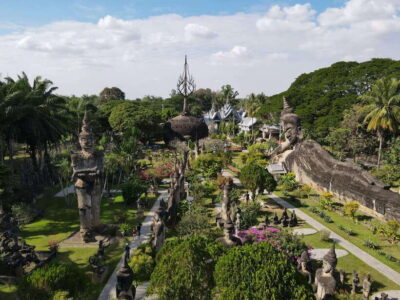
Vientiane City Highlights Tour with Buddha Park & Lunch
Read our review →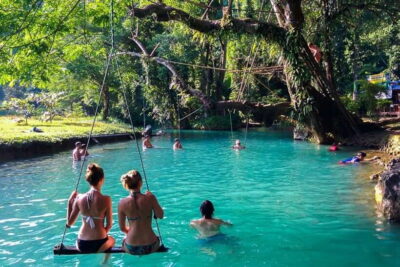
Blue Lagoon and Countryside Bike Tour with Lunch
Read our review →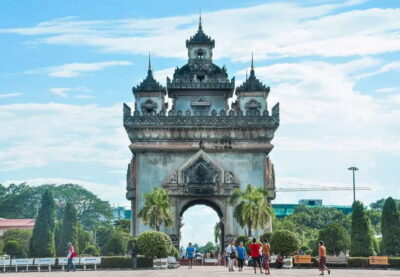
Private Full-Day Tour with Buddha Park and Lunch
Read our review →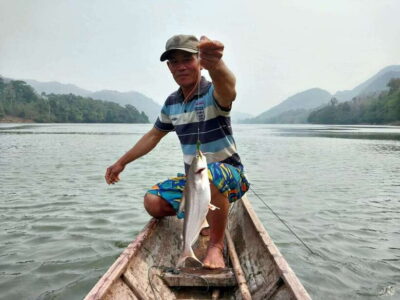
Vientiane Private Full-Day Tour with Buddha Park and Lunch
Read our review →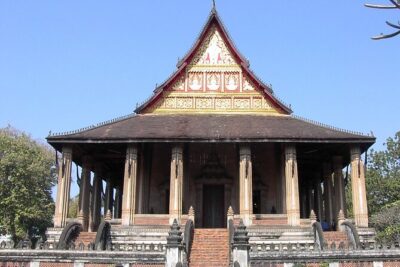
Vientiane City Day Tour and Buddha Park Visit with Lunch | Laos
Read our review →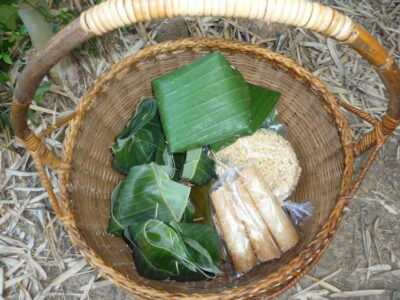
Browse the lists this tour appears in