Reviewed · GUIDED
Plain of jars tour with local guide
The most unusual part of this Phonsavan day tour is the mix of ancient stone jars and very modern local survival. You move from megalithic sites scattered among rice fields to Ban Naphia, where families make aluminum spoons from bomb casings left by the Vietnam War.
I like the private transport and the fact that you visit all three main jar sites, each with a different feel. I also like the visit to Muang Khoun, which adds ruined temples and war history to a day that could otherwise become a simple stop-and-photo outing. The drawback is the long schedule, with several hours on the road and only short visits at some stops.
Key points to know
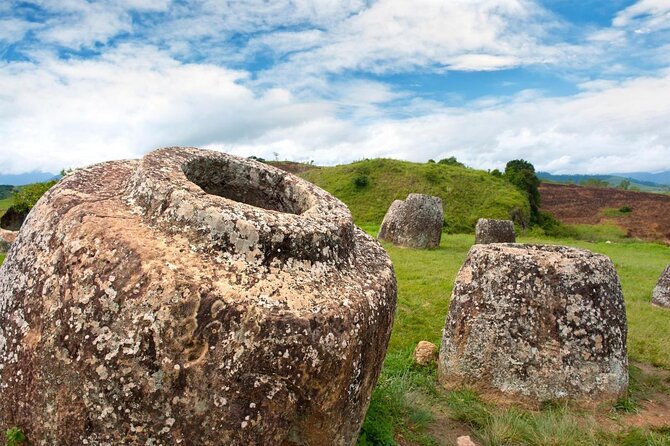
- All three Plain of Jars sites: See site 3, site 2, and the largest final stop, site 1.
- Ban Naphia village: Watch local families make aluminum spoons for sale in local markets and to visitors.
- Private tour format: Your group travels by private vehicle with an English-speaking driver-guide.
- Useful local guides: Guides named Mr Lar and Su have led this experience, with clear explanations and attentive care.
- Muang Khoun history: Visit Wat Phiawat and That Foun, remains of the former Xieng Khouang capital damaged during the 1964 to 1973 war.
- Lunch included: The midday meal is included, while soft drinks cost extra.
Why this day works well in Phonsavan
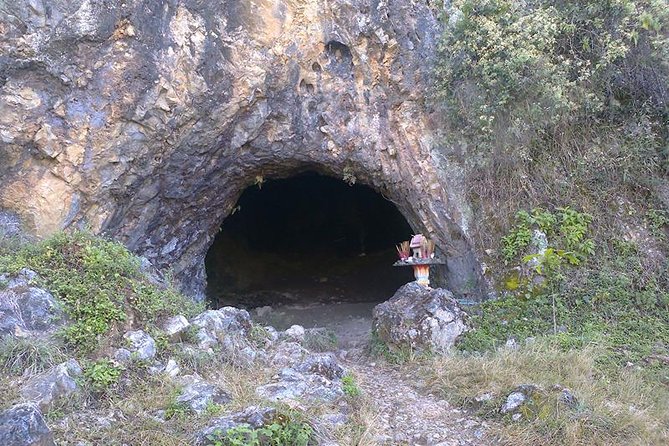
The Plain of Jars is not a single monument with one grand viewpoint. It is a group of archaeological sites spread across the countryside around Phonsavan. That makes transport important. On your own, you would need to arrange separate rides, keep track of distances, and work out how to connect the jar sites with Ban Naphia and Muang Khoun.
This tour handles that problem with private transportation and hotel pickup and drop-off. You get a full day of sightseeing without spending your time negotiating each short transfer. For a first visit to Phonsavan, that practical ease is worth a lot.
I also like the way the day connects the distant past with ordinary life today. The jars are mysterious stone structures, but Ban Naphia brings you into a working village where household income comes from making and selling spoons. The contrast gives the region more meaning than a string of archaeological photo stops.
The tour lasts about eight hours. The schedule begins at 8:30 a.m. and continues into the afternoon, with the final jar site visited around 3:30 p.m. It is a full day, not a quick half-day outing.
More ways to see the Plain of Jars:
- Plain of jars share group tour
★ 5.0 · 4 reviews - 3 Days The Plain of Jars and Xieng Khouan (Depart from Luang Prabang)
★ 5.0 · 3 reviews - Plain of jars private tour
★ 5.0 · 3 reviews
Ban Naphia and the story in recycled aluminum
Your guide and driver meet you at your hotel at 8:30 a.m. The first drive takes about 30 minutes to Ban Naphia in Phaxay district. More than 30 families live in the village, and many earn money by making aluminum spoons from bomb casings.
This is one of the most worthwhile stops because it gives you a direct look at local work. You are not simply looking at an old building or a display case. You are seeing how a village turns material connected to a painful period into useful household goods and a source of income.
The village makes a strong opening to the day. Before you reach the jars, you learn about present-day life in the area and the role of small-scale production. You can buy spoons for local use or as a practical reminder of the visit, though the supplied tour details do not specify prices or payment methods.
The stop lasts about 30 minutes and admission is free. That is enough time for an introduction and a look at the spoon-making activity, but not a long workshop session. If this part matters most to you, ask your guide to explain how the work is done and where the spoons are sold.
Plain of Jars Site 3 across the rice fields
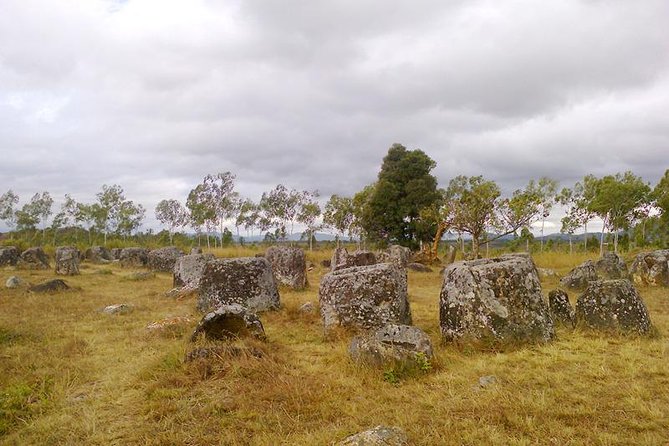
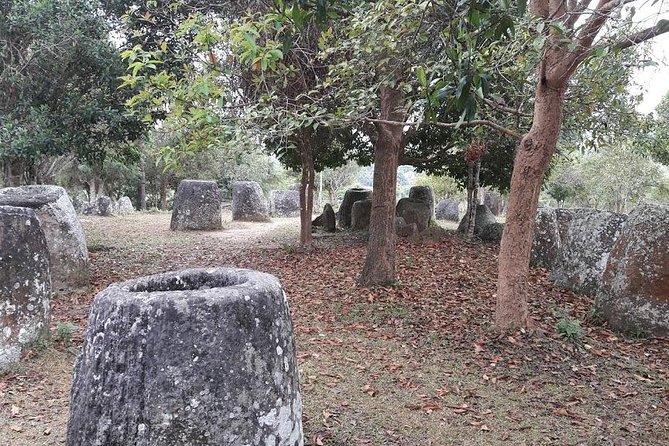
Around 10:00 a.m., you visit site 3 in Ban Xieng Di. The route includes a roughly ten-minute walk across a rice field before you reach the jars. Wear shoes you can walk in comfortably, since the path is not simply a parking area beside the main feature.
This walk gives the stop a more rural feel. Your guide can explain how the rice season affects the fields and the route. The setting matters here because the jars are not presented as isolated objects in a museum. They sit within working countryside, and the walk helps you see the relationship between the archaeological site and present village life.
The visit lasts about 45 minutes, with entry included. Site 3 is a good first jar stop because you have time to get familiar with the shape, scale, and placement of the stones before moving to the larger sites.
The tour information does not provide a complete explanation of who built the jars or their exact age. That is useful to remember. You are visiting an archaeological place with unanswered questions, and your guide’s explanation will shape how much context you receive. Guides such as Mr Lar and Su have been praised for explaining the cultural meaning and different stories connected with the jars.
Lunch near Lak Khai, then site 2
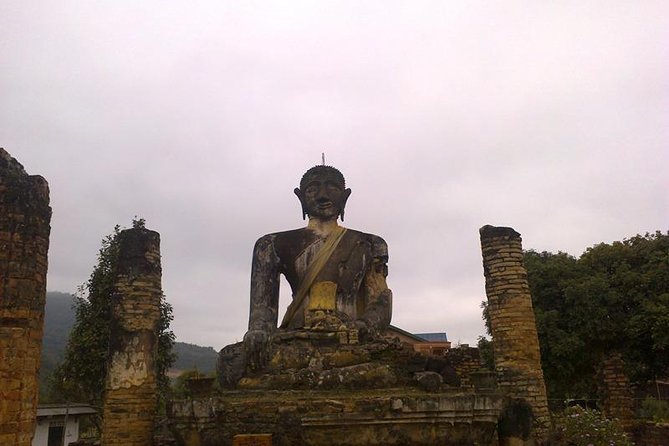
At about noon, you stop for lunch at Lak Khai before visiting site 2 near Ban Nakho. Lunch is included in the price, which keeps the day simple and avoids another planning task. Soft drinks are not included, so bring or budget for those separately.
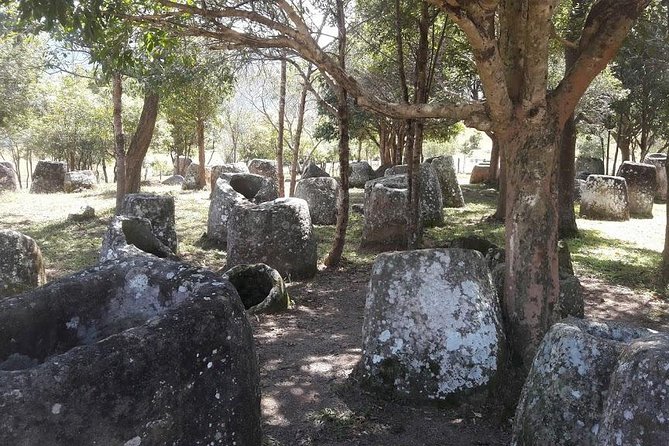
Site 2 has its own visual appeal. The route description points to large trees growing inside some of the jars, while the jars here are generally taller and longer than those at site 3. That gives you a different view of the same archaeological tradition rather than a repeat of the morning stop.
The visit takes about 35 minutes. I would use this time to look closely at the stone surfaces, compare the size and placement of the jars, and ask your guide how site 2 differs from sites 1 and 3. The short stop is enough for a focused visit, but you should not expect a long walk or a leisurely picnic here.
The changing scenery between the sites is part of the appeal, though the supplied details do not promise specific viewpoints or hiking routes. Treat the drive as part of the day rather than dead time, especially if you enjoy seeing how villages and fields fit around the archaeological areas.
A few more Laos half-days to weigh up
- Vientiane Cultural Tour with Private Guide
★ 5.0 · 80 reviews - From Luang Prabang: Guided Mountain Bike Tour with Lunch
★ 4.7 · 72 reviews - 1-Day Tour to Vang Vieng with Private Guide
★ 5.0 · 16 reviews - One Day Guided Tour: Kayaking, Zipline & Tubing In The Cave from Vang Vieng
★ 4.0 · 15 reviews
Muang Khoun and the damage of war
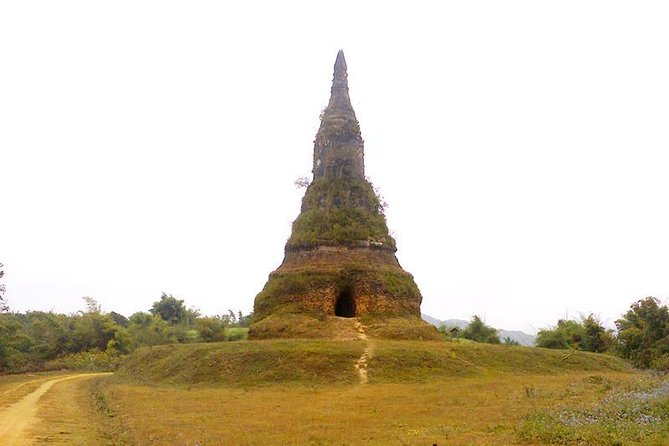
At about 2:00 p.m., the tour reaches Muang Khoun, the former capital of Xieng Khouang. The town was heavily bombed during the Vietnam War from 1964 to 1973. The stop includes That Foun and Wat Phiawat, two reminders of the area’s former importance and the damage it endured.
This part changes the tone of the day. The jars raise questions about a distant past, while Muang Khoun points to a far more recent period that still shapes the region. I like having both subjects in one tour because they prevent the day from becoming only an archaeology lesson.
The stop lasts about an hour, giving you more time than at the jar sites. Your guide can help connect the remains with the story of the former capital, although the tour details do not list a full set of structures or exhibits. Expect a historical stop with ruins and war context, not a large museum visit.
Muang Khoun is especially useful if you want to understand why local history here cannot be separated from the war years. The visit to Wat Phiawat and That Foun adds cultural depth before the final archaeological stop.
Site 1, the largest collection of jars
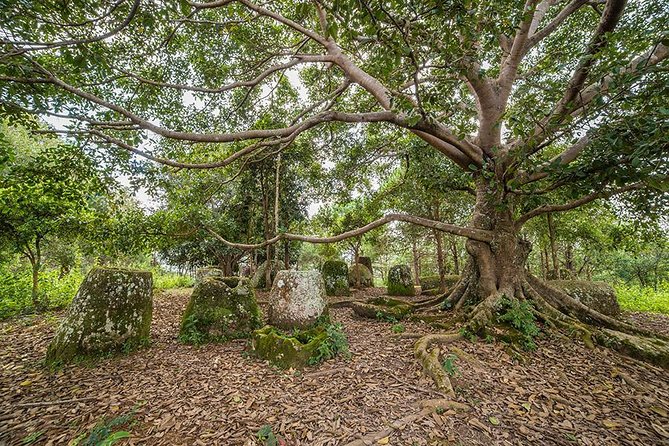
The final destination comes around 3:30 p.m. at Plain of Jars site 1. This site contains 334 jars, with an estimated weight above six tons. Transport to the final location is included, followed by return to your hotel.
Site 1 is the natural climax of the day because of its size and the number of jars. By arriving here after sites 3 and 2, you already have a basis for comparison. You can pay attention to the scale rather than seeing the jars as one confusing group of stones.
The 40-minute visit is not long, but it is enough for a concentrated walk around the main area. If you want time for photographs, quiet observation, and guide explanations, keep your pace sensible at the earlier sites. The tour does not promise a long free period at site 1, so this is a scheduled visit rather than an open-ended archaeological day.
The phrase estimated weight above six tons gives you a useful sense of the engineering challenge. Even without a firm answer about their original purpose, the physical size makes the site memorable. Your guide can add local stories and cultural explanations, which is one reason a private guide is more useful here than simply arriving with a driver.
What the $146 price includes
At $146, this is not a budget shared shuttle. It is a private experience that includes transportation, an English-speaking driver-guide, lunch, all fees and taxes, and hotel pickup and drop-off. Only your group participates, so you are not joining a large mixed bus group.
The value depends on how many people share the booking. For one person, the cost is substantial. For a small group splitting the private vehicle and guide, it becomes easier to justify, especially since the day links five separate areas and includes a meal and entry fees.
The group discount option may make the price more appealing for several people traveling together. Ask for the exact total before booking, since the available information gives the listed price but not the discount scale or group size required.
I see the strongest value in the routing. You visit Ban Naphia, three jar sites, and Muang Khoun in one day without arranging separate transport. The tour also gives you a local guide who can explain the spoon village, rice fields, jar traditions, and former capital.
The price does not include soft drinks. That is a minor extra, but it is worth remembering when planning your cash for the day.
Pace, transport, and who should book

You should book this tour if you want the main Phonsavan sights in one organized day and prefer private transport. It suits couples, families, and small groups who want a guide available for questions without sharing the schedule with strangers.
It also fits you well if you enjoy cultural stops that go beyond famous monuments. Ban Naphia and Muang Khoun are not filler. They show how local work, war, religion, and archaeology meet in the same region.
The schedule may feel too tight if you want long walks, careful photography, or extended time at each site. Site 3 includes a ten-minute walk across a rice field, and the day has several transfers. Most people can participate, but you should be comfortable with walking between the vehicle and the sites.
The private format gives you some flexibility in conversation and pace, but the published times suggest a planned route. Tell your guide early if you need extra time at a particular stop. Do not assume that every stop can be extended, since the final hotel return depends on the day’s timing.
Guide quality matters on a place like this. The tour has been led by guides including Mr Lar and Su. Both have been singled out for clear explanations, care, and helpful attention. The best use of your guide is to ask questions at each site rather than waiting for a long speech at the end.
What to bring for a better day
A few simple choices will make the schedule easier:
- Wear comfortable walking shoes for the rice-field path at site 3.
- Carry money for soft drinks and possible purchases at Ban Naphia.
- Keep your morning flexible, since the tour begins with hotel pickup at 8:30 a.m.
- Save some energy for site 1, which comes late in the afternoon.
- Ask your guide about rice seasons, local jar stories, and the history of Muang Khoun.
The tour includes lunch, private transportation, and all listed fees, so you do not need to organize the basic structure of the day yourself. The main thing you control is how much attention you give each stop.
Should you book the Plain of Jars tour?
I would book this tour if you want a well-packed introduction to Phonsavan and value a private guide. The strongest reasons are the complete three-site jar route, the Ban Naphia spoon village, the included lunch, and the added stop at former Muang Khoun.
I would hesitate only if you dislike full-day schedules or want to explore each archaeological site at a slow pace. The visits are timed, and the route covers a lot of ground.
For most first-time visitors to Phonsavan, the combination makes sense. You see the largest jar collection, compare all three main sites, learn about local work, and visit a former capital marked by war. At $146, it is best value when shared by a small group.
FAQ
How long does the Plain of Jars tour last?
The tour lasts approximately eight hours, beginning with hotel pickup at 8:30 a.m. and continuing into the afternoon.
Does the tour include hotel pickup and drop-off?
Yes. Pickup is offered from your accommodation, and transport back to your hotel is included at the end of the day.
Which Plain of Jars sites are included?
The tour visits Plain of Jars sites 3, 2, and 1.
Is lunch included?
Yes. Lunch is included in the tour price. Soft drinks are not included.
Is transportation private?
Yes. The tour includes private transportation, and only your group participates.
Is an English-speaking guide included?
Yes. An English-speaking driver-guide is included.
What happens at Ban Naphia?
You visit a village where more than 30 families live and many people make aluminum spoons from bomb casings for local markets and visitors.
How long is the walk at Plain of Jars site 3?
The route to site 3 includes about a ten-minute walk across a rice field.
What will I see at Muang Khoun?
You will visit Muang Khoun, the former capital of Xieng Khouang, including That Foun and Wat Phiawat. The town was heavily bombed during the Vietnam War from 1964 to 1973.
Can most people participate?
The tour information says most people can participate. You should still be prepared for walking, including the rice-field route at site 3.
Is the tour refundable?
No. The experience is non-refundable and cannot be changed for any reason. Cancellations or amendment requests are not refunded.
Just added around Laos
- Vientiane IG tour & Patuxay monument★ 5.0 · 5 reviews
- Vientiane : Private Custom Tour with a Local Guide★ 5.0 · 6 reviews
- Vientiane Private Lao Cooking Class with Market Tour★ 4.0 · 3 reviews
- Vientiane: Half-Day City Tour – Morning or Afternoon★ 4.0 · 3 reviews
- Vang Vieng: Zipline&Kayaking&BlueLagoon 1★ 3.7 · 3 reviews
- Vientiane: Art, Culture, & Inspiration Guided Day Tour★ 5.0 · 3 reviews
- Vientiane classic Food tour ( Included Food )★ 4.2 · 6 reviews
- Vang Vieng: Zipline&Water Cave&Tham Chang&Blue Lagoon 1★ 5.0 · 3 reviews
Guided, compared.
One Day Guided Tour: Kayaking, Zipline & Tubing In The Cave from Vang Vieng
Read our review →

Guided Vientiane City and Buddha Park Full-Day Tour
Read our review →