Reviewed · FULL-DAY
Full Day Crossing the Bolaven Plateau
The best part of this private Bolaven Plateau tour is its variety. In one day, you move from coffee fields to a 120-meter waterfall, then on to a swimming hole, a local lunch, and rural villages. It gives you a useful look at southern Laos without asking you to arrange several separate trips.
I like the family-run coffee stop, where you can learn how Arabica and Robusta beans are grown, taste freshly brewed coffee, and possibly help pick beans. I also like having your own guide, since you can ask about Laven culture, farming, and daily life as you go. The main consideration is the pace: seven hours includes a fair amount of driving, and the waterfall paths call for moderate fitness.
Key points to know before you go
- Private guiding: You travel with only your own group and an English-speaking guide, with other languages available on request for an extra charge.
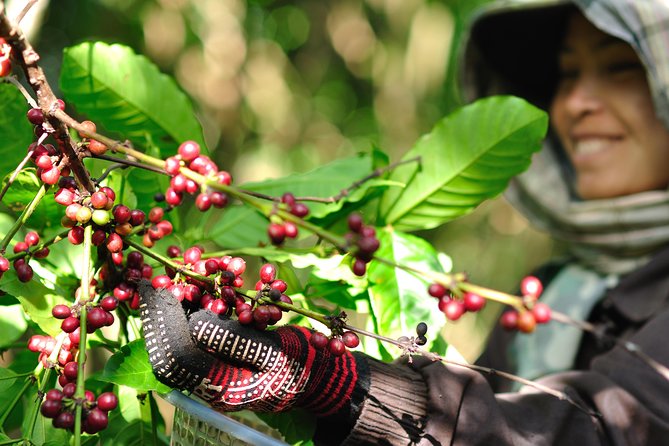
- Coffee with a family: The plantation visit includes an explanation of coffee production, a fresh cup, and the chance to help with picking.
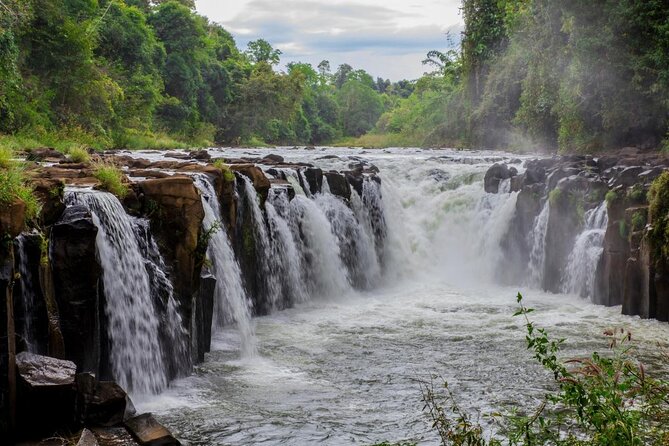
- Two very different waterfalls: Tad Fane is the grand viewpoint, while Tad Yuang offers a closer pool and possible swimming.
- A taste of local life: Village visits bring the tour beyond scenery and into farming communities connected to the plateau.
- Lunch is included: Food at a local restaurant is covered, but drinks and personal purchases are not.
- Simple Pakse logistics: Hotel pickup and return are included for accommodations inside Pakse, with an 8:00 am start.
Why the Bolaven Plateau makes a good day trip from Pakse
Pakse is a useful base for southern Laos, but the town itself does not show you the full character of the region. The Bolaven Plateau rises east of the city and is known for coffee growing, waterfalls, scattered villages, and a cooler highland setting. The drive to the plateau takes about 45 minutes over paved roads, so you reach the main area without losing half the day on rough tracks.
The plateau is home to the Laven minority, and more than 20,000 families live and work in roughly 250 villages across the region. That human side matters. You are not only ticking off two waterfalls. You are also seeing how coffee, small-scale farming, craft work, and village life fit together.
I like the way this tour combines famous sights with ordinary places. Tad Fane gives you the big view people come for, but the plantation and village visits help explain how people make a living here. The result is more useful than a waterfall-only outing.
The tour costs $125.57 per person. That is not a budget local bus trip, but the price includes a private guide, air-conditioned transport, a professional driver, entrance and donation fees, lunch, and hotel pickup and return within Pakse. For a couple, family, or small group that values a private vehicle and flexible conversation, the cost can be fair.
A few more Laos half-days to weigh up
- FULL DAY – Kuang Si Waterfall, Kayak on the Nam Ou / Mekong River, Pak Ou Caves
★ 5.0 · 81 reviews - Full Day Trek to Kuang Si Waterfalls, Remote Village
★ 5.0 · 38 reviews - Vientiane: Private Full-Day Tour with Buddha Park and Lunch
★ 4.8 · 33 reviews
Starting from Pakse at 8:00 am
Your guide and driver collect you from your booked Pakse hotel at about 8:00 am. The guide speaks English, and the tour is operated privately, so only your group participates. That is a real advantage here. You can ask questions as the road climbs, stop to clarify something, or spend more time at a place that interests you.
The vehicle is air-conditioned, which matters in southern Laos even though the plateau can feel cooler than Pakse. You should still bring a hat, sunglasses, and high-SPF sunscreen. Cloud cover does not remove the strength of the sun.
Pickup and return are included only for accommodation in Pakse and inside the stated Pakse area. If you are staying in Champasak, Done Det, the 4000 Islands, Chong Mek, or near Pakse International Airport, you need to ask about a supplement. Do not assume the standard transfer covers those areas.
The operator asks for your passport number and expiration date during booking because of local immigration requirements. That is an easy detail to overlook, so have the information ready.
Coffee, family work, and a fresh cup
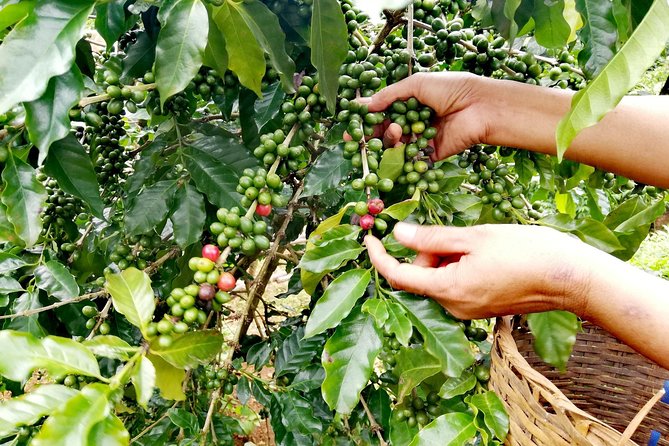
The first major stop is a family-run coffee plantation. The Bolaven Plateau is one of the few places in Laos where both Arabica and Robusta coffee are grown on a serious local scale. You get a closer look at the work behind the drink, from growing the beans to processing them for use.
This stop is more personal than simply buying a bag of coffee at a shop. The family explains its methods, and you can taste a freshly brewed cup. You may also help pick coffee beans, depending on the season and what is happening on the plantation that day.
I especially like this part because it gives the plateau a flavor beyond scenery. Coffee growing is tied to the local economy and to the land, so the stop helps you understand why the area is important to the people who live there.
The plantation visit is allocated about two hours, which is generous. That time may include driving within the area, the explanation, tasting, and hands-on activity. If coffee is not your thing, you may find the stop a little long, but the family setting and farming connection make it worthwhile for most visitors.
A useful question to ask your guide is how Arabica and Robusta differ in local growing conditions and taste. Because the tour is private, you have room for that kind of conversation rather than having to follow a fixed group script.
Tad Fane and the 120-meter double cascade
After the coffee stop, you head to Tad Fane, the most dramatic waterfall on this route. Water from the Champi and Pak Rivers drops about 120 meters in a double cascade inside the Dong Houa Sao National Protected Area.
You view the falls from a platform rather than walking directly into the spray. That makes Tad Fane a good first waterfall stop: the scale is easy to appreciate, and you can take in the forested setting without needing a swim or a demanding route.
The viewing area is best for a wide, high view of the two streams plunging over the cliff. Bring a camera, but protect it carefully. Water and spray can damage phones and other electronics, and the tour operator places responsibility for that protection with you.
About 90 minutes is set aside here. That gives you time for photographs, a look from the viewing area, and questions for your guide. Tad Fane is primarily a viewpoint, so do not expect the same close contact with the water that you get later at Tad Yuang.
A completely different way to spend a day in Laos:
- Luang Prabang: Cruise to Pak Ou Caves & Kuang Si Waterfalls
★ 5.0 · 1,769 reviews - Luang Prabang: Cruise to Pak Ou Caves & Kuang Si Waterfalls
★ 4.8 · 1,360 reviews - Vang Vieng: Kayaking & Cave Tubing with Zip Line/Blue Lagoon
★ 4.5 · 410 reviews - Half Day Mekong Cruise to Pak Ou Caves (Morning / Afternoon)
★ 4.6 · 290 reviews
Tad Yuang: a closer waterfall and possible swim
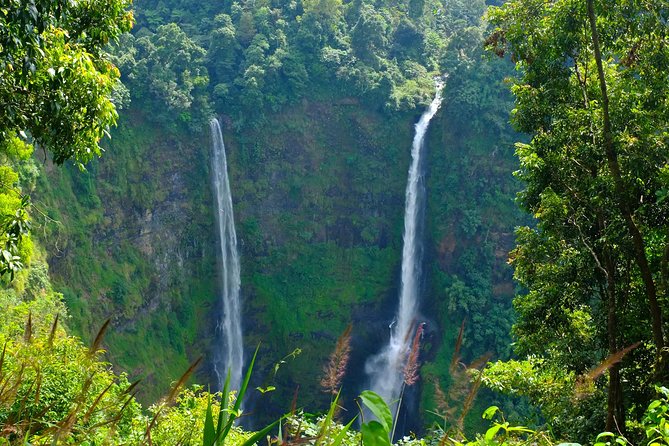
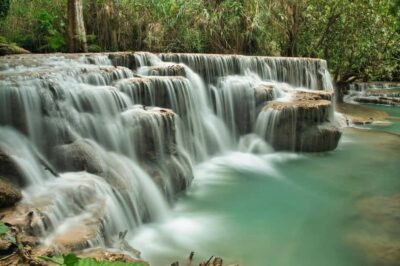
Tad Yuang has a different feel. Its water drops about 40 meters over rock into a pool below, and the route brings you closer to the water. Under suitable conditions, you can swim beneath the waterfall, and it may be possible to get behind the curtain of falling water.
That possibility depends on conditions at the site. The description does not promise a swim at every departure, so treat it as an appealing option rather than the sole reason to book. Even if you do not enter the water, the fall and pool make a strong contrast with Tad Fane’s distant double cascade.
Wear clothing and shoes that can handle wet conditions. The tour requires moderate physical fitness, and waterfall areas may involve walking over uneven surfaces or steps. The supplied information does not specify exact distances or accessibility, so anyone with mobility concerns should ask the operator before booking.
You have about 90 minutes here. That is enough time to walk to the viewpoint, take pictures, and swim if conditions allow. It is not so long that the stop becomes tiring for people who prefer to stay dry.
Keep sunscreen, a hat, and electronics protected. The combination of strong sun, water, and slippery surfaces calls for ordinary care. If you carry a phone near the pool, use a proper waterproof pouch rather than relying on a thin plastic bag.
Lunch in a local restaurant
After the morning stops, you eat lunch at a nearby local restaurant. Food is included, but drinks and personal extras are not. The meal is a practical way to keep the day moving, rather than a long restaurant experience built around a formal menu.
The operator says it will make efforts to meet dietary needs, but the restaurant may not be able to confirm every request in advance. If you have a strict allergy or a serious dietary restriction, state it when you book and confirm it again with your guide at the start of the day.
I like that lunch takes place locally instead of sending you back to a predictable hotel restaurant. Still, you should keep expectations sensible. The food is included, but the exact dishes are not specified, and the restaurant choice can affect what is available.
Carry some money for drinks, snacks, or small purchases. Personal expenses, shopping, tips, and gratuities are not included in the tour price.
Village life and the plateau beyond the waterfalls
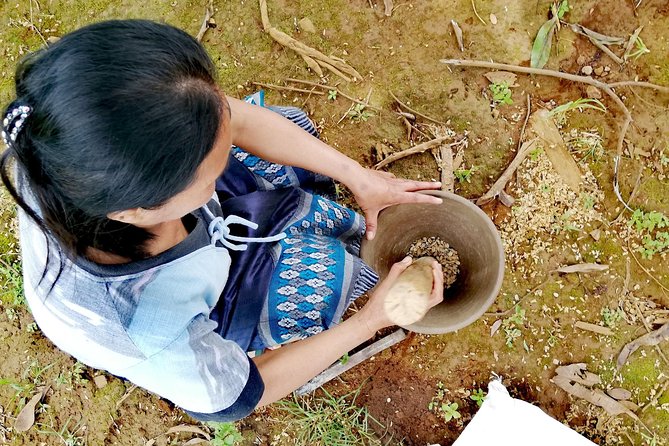
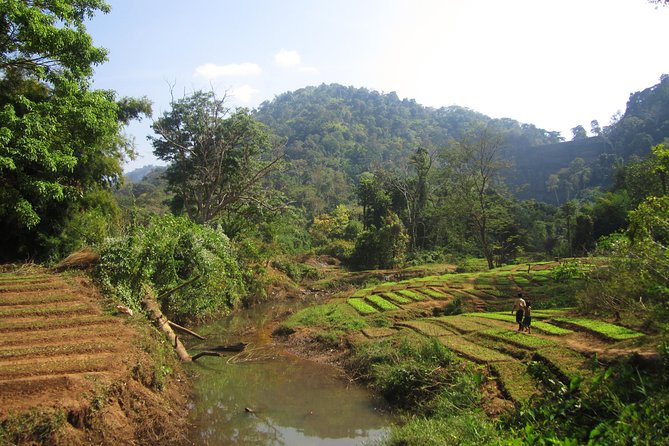
The afternoon shifts from scenery to people. You visit rural villages and get a chance to learn about local ways of living. The plateau has around 250 villages, and many families work with agriculture, so village visits provide context for the coffee plantation you saw earlier.
The value here depends heavily on the quality of the conversation. A private English-speaking guide can explain what you are seeing, help you approach respectfully, and answer questions about work and customs. You should avoid treating the village as a display. Ask before photographing people, homes, or work.
The tour description emphasizes the hospitality of the villagers and the continuity of local ways of life. That does not mean time has literally stopped, and you should not expect a staged museum. Instead, you may see a more rural side of southern Laos, with daily work and community life continuing around you.
One published account of the experience also describes a knife-making workshop with guide Lei and driver Le. The workshop is not listed in the main stop-by-stop schedule, so you should not count on it as a guaranteed part of every departure. Still, it suggests that the village portion can include a practical craft encounter when local arrangements allow.
The village visit is scheduled for about an hour. That is enough for an introduction, but not a long cultural study. If you want extended homestay time, craft lessons, or many village visits, you will need a different or longer program.
What the private format changes
Private touring is the strongest practical feature of this experience. You are not waiting for a large group to finish every photograph or trying to hear a guide over several conversations. You can ask about coffee, Laven culture, waterfalls, or local customs as questions occur to you.
It also gives you some flexibility within the day, though the operator does not promise an entirely custom itinerary. The listed stops and timing create a fairly full schedule, so major changes may not be possible.
The guide and driver matter here. One account specifically names Lei as guide and Le as driver, with praise for a day that combined a knife-making workshop, waterfalls, and coffee. Names and staffing can vary, but you can expect a professional English-speaking guide and driver assigned to your private group.
The private format is most useful for:
- Couples who want a quiet day outside Pakse
- Families that prefer their own vehicle
- Small groups sharing the cost
- First-time visitors who want cultural explanation along with scenery
- Coffee drinkers interested in production rather than just tasting
- People comfortable with moderate walking and a possible swim
It may be less suitable if you want a very slow day, a nightlife-style schedule, or a long trek. It is also not the right choice if you want to avoid all driving. The route covers several stops across the plateau, and transport is part of the experience.
Timing, fitness, and what to pack
The full outing lasts about seven hours, starting around 8:00 am. The scheduled stops total roughly six hours, with the rest of the time used for transfers between Pakse, the plantation, waterfalls, villages, and your hotel.
The tour asks for a moderate level of physical fitness. Bring comfortable shoes with a firm grip, especially if you plan to approach the pool at Tad Yuang. A swimsuit and a change of clothes make sense if you want to use the water, though swimming is not guaranteed.
Pack:
- Hat or cap
- Sunglasses
- High-SPF sunscreen
- Water-resistant protection for your phone and camera
- Comfortable walking shoes
- Swimwear and a change of clothes
- Money for drinks, tips, and personal purchases
The operator recommends protecting electronics from spray and other natural elements. That advice is worth taking seriously at both waterfalls.
Free cancellation is available when you cancel at least 24 hours before the local start time. Changes or cancellations made within 24 hours are not accepted for a refund. Pickup details depend on the hotel information you provide, so check that your accommodation details are correct.
Is $125.57 a fair price?
At $125.57 per person, this is a midrange private day trip rather than a bargain excursion. The price includes transport in an air-conditioned vehicle, a professional driver, an English-speaking guide, entrance and donation fees, lunch food, taxes, hotel pickup, and return within Pakse.
The value improves when two or more people share the private vehicle. You are paying for convenience and personal attention as much as for the sights. You do not need to find separate transport to the plateau, negotiate with drivers at each stop, or arrange entrance payments on the way.
The price is less compelling for a solo visitor focused only on waterfalls. You could potentially find cheaper transport options, but they may not include the plantation explanation, village visit, lunch, and private English-speaking guidance.
Also remember the extras. Drinks, tips, shopping, and personal expenses are separate. Transfers from outside Pakse may cost more, and the listed price does not include accommodation, insurance, visas, or flights.
Should you book this Bolaven Plateau day trip?
Book it if you want a well-rounded day from Pakse with coffee, waterfalls, and village life in one route. The private guide, hotel transfers, included lunch, and chance to swim at Tad Yuang make it easy to manage, while Tad Fane supplies the big visual highlight.
I would be especially inclined to book it for a couple or small group that wants direct access to a guide. Ask in advance about the exact pickup time, dietary needs, swimming conditions, and whether a craft activity such as knife-making can be included.
Skip it if you want a long, quiet stay at one waterfall, extensive hiking, or a guaranteed swim. The schedule is full, the village visit is brief, and several hours are spent in the vehicle. For most first visits to southern Laos, though, the mix is sensible: you see the plateau’s famous water, taste what it grows, and meet people who live and work there.
FAQ
Where does the tour start?
The tour starts with pickup from your booked hotel in Pakse at around 8:00 am.
How long does the experience last?
The tour lasts approximately seven hours, including transportation between Pakse and the Bolaven Plateau stops.
Is the tour private?
Yes. Only your group participates, with a professional English-speaking guide and driver.
What is included in the price?
The price includes an English-speaking guide, air-conditioned transportation, a professional driver, entrance and donation fees for listed visits, lunch food, taxes, service charges, and pickup and return within Pakse.
Can I swim at Tad Yuang waterfall?
Swimming beneath Tad Yuang is possible, and it may also be possible to get behind the falling water. Conditions can affect whether swimming is available.
Is lunch included?
Yes. Lunch at a local restaurant is included, but drinks and personal expenses are separate.
Does pickup cover hotels outside Pakse?
No. Standard return transfers apply to customers staying inside Pakse. Transfers from Champasak, Done Det, the 4000 Islands, Chong Mek, Pakse International Airport, and other areas require a supplement.
What happens if I cancel?
You can receive a full refund if you cancel at least 24 hours before the local start time. Cancellations or changes made less than 24 hours before departure are not accepted for a refund.
Just added around Laos
- Vientiane IG tour & Patuxay monument★ 5.0 · 5 reviews
- Vientiane : Private Custom Tour with a Local Guide★ 5.0 · 6 reviews
- Vientiane Private Lao Cooking Class with Market Tour★ 4.0 · 3 reviews
- Vientiane: Half-Day City Tour – Morning or Afternoon★ 4.0 · 3 reviews
- Vang Vieng: Zipline&Kayaking&BlueLagoon 1★ 3.7 · 3 reviews
- Vientiane: Art, Culture, & Inspiration Guided Day Tour★ 5.0 · 3 reviews
- Vientiane classic Food tour ( Included Food )★ 4.2 · 6 reviews
- Vang Vieng: Zipline&Water Cave&Tham Chang&Blue Lagoon 1★ 5.0 · 3 reviews
Full-Day, compared.
FULL DAY – Kuang Si Waterfall, Kayak on the Nam Ou / Mekong River, Pak Ou Caves
Read our review →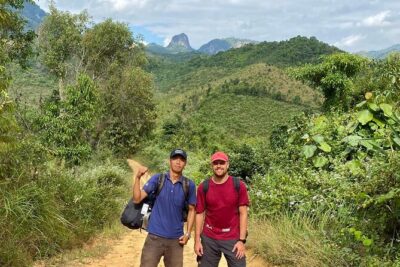
Full Day Trek to Kuang Si Waterfalls, Remote Village
Read our review →
Private Full-Day Tour with Buddha Park and Lunch
Read our review →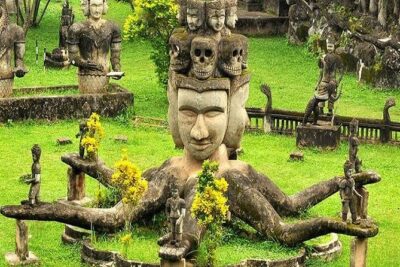
Private Tour: Vientiane City Tour Full Day with Buddha Park
Read our review →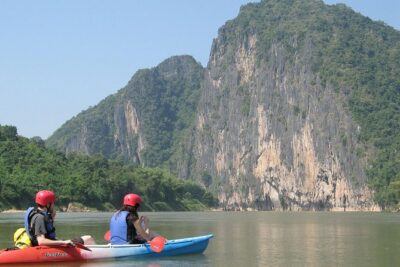
Full day / Half Day Kayaking and Pak Ou Caves with optional sunset cruise
Read our review →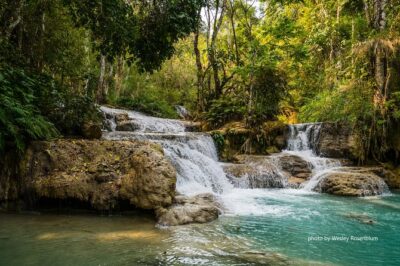
Private Tour Full-day Morning Market, Villages and Scenic Kuang Si Waterfall
Read our review →