
Reviewed · LUANG PRABANG TOURS
3 Days The Plain of Jars and Xieng Khouan (Depart from Luang Prabang)
The Plain of Jars is the star here, but the road to Phonsavan gives this trip its real character. You pass hill-tribe villages, old caves, war sites, and working communities rather than simply arriving at an archaeological stop, taking photos, and leaving. I like the mix of ancient mystery and recent history, especially the way the MAG UXO Centre and Ban Na Pia connect the scenery to Laos’s painful wartime past.
I also like that this is a private tour, so your group can travel at its own pace with a guide such as Vone or Tin. The main drawback is the long road journey from Luang Prabang to Phonsavan, packed into a short three-day schedule. Meals and accommodation are not included, and the first day may feel tiring.
Key details before you book
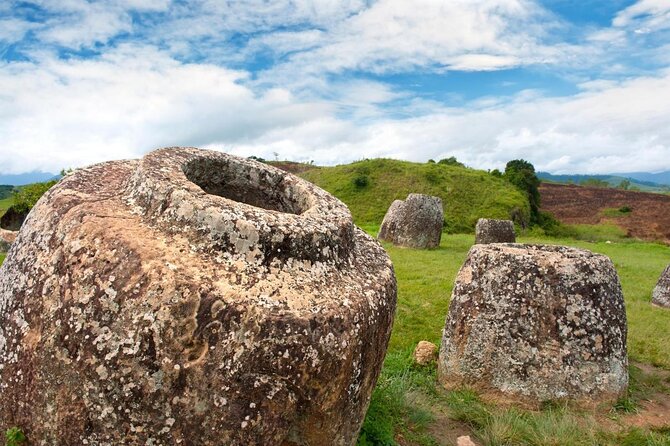
- Three Plain of Jars locations: Visit Jar Site 1, Jar Site 2, and the area around Ban Na Pia, rather than settling for one quick stop.
- A long overland route: The trip covers about 260 kilometers from Luang Prabang to Phonsavan, with village and cave stops along the way.
- Private travel: Only your own group participates, which gives you more flexibility than a standard group departure.
- War history with a local focus: The MAG UXO Centre and Ban Na Pia show how unexploded ordnance still affects daily life.
- Silk production up close: At Mulberries, you can follow the process from silkworm cocoons to colored scarves.
- Plan for extra costs: The $540 price covers sightseeing, transport, fees, and taxes, but not meals or accommodation.
Why the Plain of Jars deserves three days
Phonsavan sits in Xieng Khouang Province, far from the polished temple circuit around Luang Prabang. The journey takes you into a quieter part of Laos, where village life, open countryside, old royal sites, and wartime scars all share the same route.
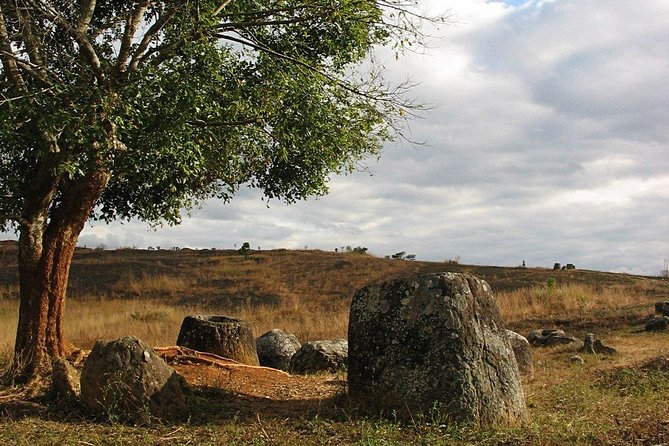
The famous stone jars are not just a photo stop. Their purpose remains uncertain, and that mystery is part of the appeal. Some are large, weathered, and scattered across grassy sites, while others sit near evidence of bombing from the Second Indochina War. You get a better sense of the area by visiting more than one site, then adding Muang Khoun and the MAG UXO Centre.
This tour gives you that wider picture in three days. It does not treat the jars as an isolated archaeological curiosity. Instead, it places them among Hmong villages, markets, silk production, and the difficult work of clearing unexploded bombs.
More ways to see the Plain of Jars:
- Plain of jars tour with local guide
★ 4.5 · 8 reviews - Plain of jars share group tour
★ 5.0 · 4 reviews - Plain of jars private tour
★ 5.0 · 3 reviews
Day 1: The winding road from Luang Prabang to Phonsavan
The departure is listed around 8 a.m., with the day described as beginning at 7:30. Confirm the exact pickup time before setting out. The meeting point is the Manifa Travel office on Sakkaline Road in Vat Sene Village, opposite Villa Santi Hotel.
From Luang Prabang, you travel toward Phonsavan in an air-conditioned vehicle. The stated distance is about 260 kilometers, but the value of the trip is not measured only in distance. The route includes stops at Hmong and other hill-tribe villages, giving you a look at communities that are often missed when visitors fly or rush between major towns.
The village visits are described as friendly encounters, but you should still behave as a respectful observer. Ask before taking photographs, avoid treating homes as displays, and follow your guide’s lead. A good guide makes a big difference here. Vone, for example, is described as kind, attentive, and good at explaining Lao culture while keeping a demanding schedule moving.
The first listed stop is Phou Khoun, with about an hour set aside. It is a useful break from the road and a chance to see the change from Luang Prabang’s river setting to the higher rural country around the route. Do not expect a large attraction with a long visitor program. This is a road stop, and its value comes from the setting and the surrounding village life.
Tham Pha Cave at Nong Tang
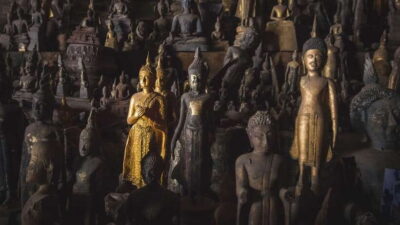
The next stop is Tham Pha, also called the Buddha Cave, near Nong Tang. The cave contains Buddha images said to be more than 200 years old. It also served as a hospital and shelter during the Indochina War, giving the visit a second layer beyond religion.
I like this pairing of spiritual and wartime history. The same sheltered space has served different needs over generations, and the guide can help connect those periods. Allow about an hour here.
The first day is the toughest part of the schedule. You spend much of it on the road, and the route may feel tiring after several stops. That is the price of reaching Phonsavan overland from Luang Prabang. If you dislike long drives, this tour may feel rushed. If you want to see rural Laos between the two towns, the road becomes part of the experience rather than dead time.
Accommodation is not included, so arrange it separately in Phonsavan or request it from the operator. Meals are also your responsibility.
Day 2: Three jar sites and the story beneath them
Day two is the core of the trip. You spend the day around the Plain of Jars and Xieng Khouang, looking at the ancient stone vessels and the marks left by the Second Indochina War.
The itinerary gives about an hour to each listed stop, but the exact pace may vary. Since this is a private activity, you may have more say in how long you spend at each place. Still, it is wise to ask your guide how the timing works, especially if you want longer at the jars or at the war-related stops.
A few more Luang Prabang half-days to weigh up
- Luang Prabang: Nong Khiaw 3-Day Trekking & camping, Homstay
★ 5.0 · 9 reviews - Luang Prabang: 3-Day Cultural Remote Trek With Homestay
★ 4.9 · 9 reviews
Plain of Jars Site 1
Site 1 is the main introduction to the jar fields. You see the ancient stone vessels spread across the site, with the open setting making their scale and oddness easier to appreciate. The jars are the kind of monument that raises more questions than it answers.
Your guide can add meaning by explaining the local legends and the known archaeological setting. I would not expect every mystery to be solved. That uncertainty is part of the experience, but it also means the visit depends heavily on interpretation.
Because the area was heavily bombed, you should follow marked paths and your guide’s instructions. Stay within cleared zones. The war is not simply a chapter in a museum here. It remains a safety concern in the countryside.
Site 2 and Ban Na Pia
Site 2 lies about 20 kilometers southwest of Phonsavan. Seeing a second jar site helps you compare the locations instead of assuming the first field tells the whole story. The setting and arrangement change, and the repetition gives you time to think about how these monuments were placed across the province.
Near Site 2, the village of Ban Na Pia offers one of the most striking modern details on the route. Residents reuse metal from unexploded bombs to make spoons and other items for sale. This is a practical response to a dangerous legacy, not a decorative war exhibit.
I find this stop especially important because it connects history to household income. The metal has gone from weapon to useful object, though the process sits within a much larger and still painful problem. If you buy something, you are supporting a village craft, but you should also remember what the material represents.
Muang Khoun and Wat Phiawat
In the afternoon, the tour heads to the old capital of Muang Khoun. This was once the center of the Phuan Kingdom and later served as a French colonial provincial capital. The visit includes Wat Phiawat, an old temple site that helps explain the area’s political and religious importance.
Muang Khoun adds variety after the open jar fields. You are no longer looking only at mysterious stone vessels. You are seeing the remains of a former center of power and the traces of several periods of Lao history.
The one-hour schedule may feel short if you want time for careful photography or detailed exploration. Ask your guide how much time is available at Wat Phiawat and the surrounding ruins. A private group should have a little more flexibility, but the day still has another major stop.
MAG UXO Centre
You return to Phonsavan around 4 p.m. for the MAG UXO Visitor Information Centre and the official tourist information center. This is where the war story becomes clearer.
MAG works with communities affected by unexploded ordnance. The center helps explain the danger left behind by bombing and the work needed to make farmland and paths safer. After seeing bomb metal turned into spoons at Ban Na Pia, this stop gives you the wider context.
I would not skip it. The jars are the headline attraction, but the UXO story is essential to understanding Xieng Khouang today. It also keeps the visit honest. You are not touring an untouched archaeological zone. You are visiting a place where ancient sites and modern hazards exist side by side.
The schedule makes day two full but sensible. Three jar-related stops, Muang Khoun, and the UXO center give you a broad view without forcing you into a single theme.
Day 3: Markets, silk, and the road onward
The final morning begins with a short visit to a local morning market. This is a useful contrast to the formal attractions of the previous day. Markets show what people buy, eat, and sell in ordinary daily life, though the supplied schedule does not specify how much time you get there.
Afterward, you visit Mulberries Organic Silk Farm. You can observe silk production from cocoons through weaving and see how raw material becomes colorful scarves. This is a hands-on craft stop rather than another historical site, and it gives the final day a calmer pace.
I like the inclusion of the silk farm because it supports a different kind of local economy. The visit is not only about looking at finished souvenirs. You see the labor and skill behind them. If you are thinking about buying a scarf, the weaving process gives you a better basis for judging what you are purchasing.
The day also includes departure from Phonsavan, but the exact ending point is not specified in the details provided. Ask where you will finish and how the onward transport works before booking. The activity begins at the Manifa Travel office, but it ends somewhere different.
What the $540 price really covers
At $540 per person, this is not a budget road trip. The price makes more sense if you value a private vehicle, a guide, several days of sightseeing, and the ability to avoid arranging each part yourself.
Included are the sightseeing listed in the program, an air-conditioned vehicle, and all fees and taxes. That removes some common surprises. You are not paying separate entry charges at each stop, at least according to the provided inclusions.
The price does not include accommodation or meals. Those costs can change the final total, so budget for them before comparing this tour with a shorter excursion. You should also clarify whether accommodation can be added through the operator, since it is available on request.
The private format improves the value for couples, families, or a small group that wants its own vehicle. Group discounts are offered, which may make the per-person cost more reasonable when several people travel together. Solo travelers should look carefully at the price, since there is no larger group to share the cost.
The guide can make or break the long days
This itinerary asks a guide to do more than point out jars. You need someone who can explain Lao culture, handle a long road schedule, and place the UXO story in context without turning every stop into a lecture.
Guides associated with Manifa Travel include Vone, Tin, and Mr. Latte, though your assigned guide may differ. Vone is described as especially kind and organized during a demanding program. Tin is noted for excellent English, professionalism, care, and attention to detail. Those qualities matter on a three-day private trip, particularly when the road is long and the schedule is full.
The guide also helps with village etiquette and timing. Ask questions, but remember that visits to Hmong communities should be treated as encounters with living communities, not staged attractions. A good guide helps you see more while keeping the interaction respectful.
Who should book this trip?
I would recommend it to you if you want the Plain of Jars as part of a wider look at Xieng Khouang. It suits people interested in archaeology, rural life, silk weaving, local markets, temples, and the continuing effects of war.
It is also a good choice if you prefer a private vehicle and personal guide. The activity is described as suitable for most travelers, and only your group participates. That gives you a more personal setup than a fixed group tour.
I would hesitate if you have only a short attention span for long drives, or if you want a relaxed holiday with plenty of unplanned time. Day one is mainly a road journey, day two is full, and your own accommodation and meals must be arranged.
Cancellation terms are strict close to departure. You can receive a full refund if you cancel at least six full days before the start time. Cancellation two to six days ahead allows a 50 percent refund, while cancellation less than two days before departure is nonrefundable.
Should you book the Plain of Jars tour?
Book it if you want context, not just photographs. The strongest part of this experience is the combination of ancient jars, Hmong villages, Muang Khoun, Tham Pha Cave, silk work, and the UXO story. The tour shows how the past still shapes daily life in Xieng Khouang.
Before paying, confirm the exact start time, accommodation arrangements, meal plans, and final drop-off point. If those details work for you, the $540 cost can be fair for a private three-day journey with transport, guiding, and sightseeing fees included. If you mainly want to see one jar field as quickly as possible, choose a shorter and less expensive option.
FAQ
How long is the tour?
The tour lasts approximately three days.
Where does the tour begin?
It begins at the Manifa Travel Luang Prabang office on Sakkaline Road in Vat Sene Village, opposite Villa Santi Hotel.
What time does the tour start?
The listed start time is 8 a.m. The first day is also described as beginning at 7:30 a.m., so confirm the exact pickup time before departure.
Is this a private tour?
Yes. Only your group participates in the activity.
Are accommodation and meals included?
No. Accommodation and meals are not included. Accommodation may be available on request.
What is included in the $540 price?
The price includes the sightseeing described in the program, an air-conditioned vehicle, and all fees and taxes.
Just added around Luang Prabang
- The Namkhan – Yoga Class (8 am or 4 pm)★ 4.0 · 5 reviews
- The Namkhan – Traditional Lao Bamboo Weaving★ 5.0 · 4 reviews
- Unwind with a Sunset Cruise on the Mekong River★ 5.0 · 4 reviews
- Sunset Cruise in Luang Prabang with Live Performance★ 4.5 · 3 reviews
- Private Tour: Half-Day City Tour of Luang Prabang★ 4.5 · 4 reviews
- Luang Prabang Street Food Culture, Paper Handicraft Village Tour★ 5.0 · 10 reviews
- Luang Prabang’s Beauty & Heritage in 1 Day – All-Inclusive Tour★ 5.0 · 6 reviews
- Private Luang Prabang City Tour★ 5.0 · 3 reviews
Luang Prabang Tours, compared.
Half Day Mekong Cruise to Pak Ou Caves (Morning / Afternoon)
Read our review →
Browse the lists this tour appears in